Ultimate Aromatherapy Guide: Benefits, Essential Oils, Diffusers & Relaxation Methods
Aromatherapy is the practice of using natural essential oils extracted from plants to support relaxation, mood enhancement, sleep quality, stress management, and overall well-being. It works primarily through inhalation and topical application, allowing aromatic compounds to interact with the body’s sensory and nervous systems. Popular methods include diffusers, massage oils, steam inhalation, and aromatherapy baths.
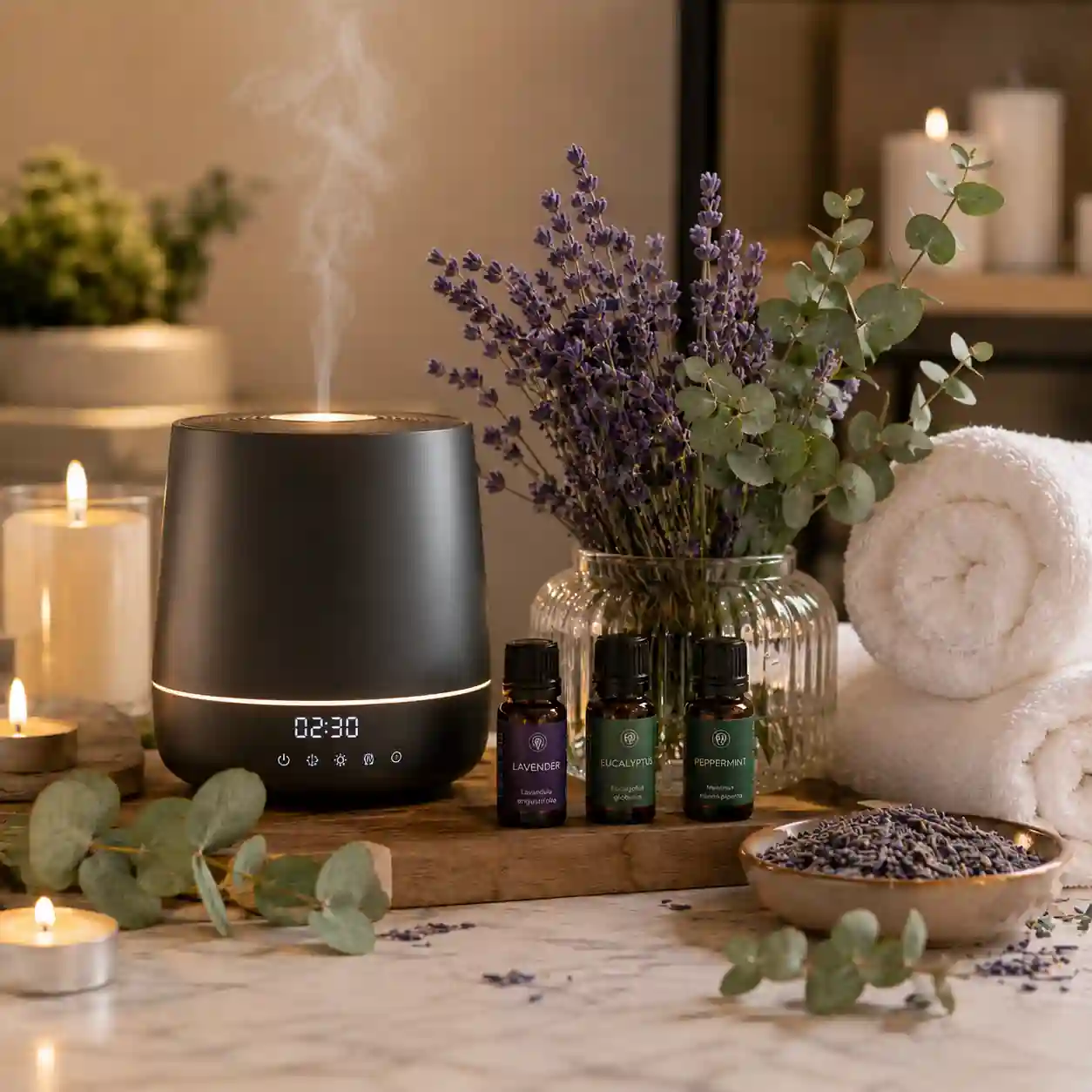
Introduction about Aromatherapy
The demand for natural wellness solutions has grown rapidly in recent years, and aromatherapy remains one of the most widely used complementary wellness practices worldwide. From reducing everyday stress to creating a calming home environment, aromatherapy offers a simple and accessible way to support mental and physical well-being.
This Ultimate Aromatherapy Guide: Benefits, Essential Oils, Diffusers & Relaxation Methods explains everything you need to know about aromatherapy, including how it works, the most popular essential oils, different diffuser types, practical relaxation techniques, buying recommendations, and expert tips for safe use.
Whether you’re a complete beginner or looking to improve your existing aromatherapy routine, this guide provides evidence-based information and practical advice to help you make informed decisions.
What Is Aromatherapy?
Aromatherapy is a holistic wellness practice that uses concentrated plant extracts known as essential oils to support emotional and physical well-being.
Essential oils are extracted from various parts of plants, including:
- Flowers
- Leaves
- Bark
- Roots
- Seeds
- Citrus peels
These highly concentrated oils contain aromatic compounds that create distinctive scents and may influence mood, relaxation, and comfort.
Key Components of Aromatherapy
| Component | Purpose |
|---|---|
| Essential Oils | Provide aromatic compounds |
| Diffusers | Disperse oils into the air |
| Carrier Oils | Dilute essential oils for topical use |
| Inhalation Methods | Support relaxation and mood |
| Massage Techniques | Combine touch and aromatherapy |
Aromatherapy is often integrated into:
- Spa treatments
- Massage therapy
- Meditation practices
- Yoga sessions
- Home wellness routines
- Sleep-support rituals
How Aromatherapy Works
Aromatherapy primarily works through two pathways:
1. Inhalation
When you inhale essential oil molecules:
- Aromatic compounds enter the nose.
- They stimulate olfactory receptors.
- Signals travel to brain regions associated with emotion and memory.
- This may influence mood, stress response, and relaxation.
This direct connection explains why certain scents can trigger memories or create immediate emotional responses.
2. Topical Application
When diluted properly and applied to the skin:
- Oils may provide localized comfort.
- Massage enhances relaxation.
- Aromatic compounds are absorbed in small amounts through the skin.
Topical aromatherapy is commonly used for:
- Massage
- Bath products
- Roll-on blends
- Body oils
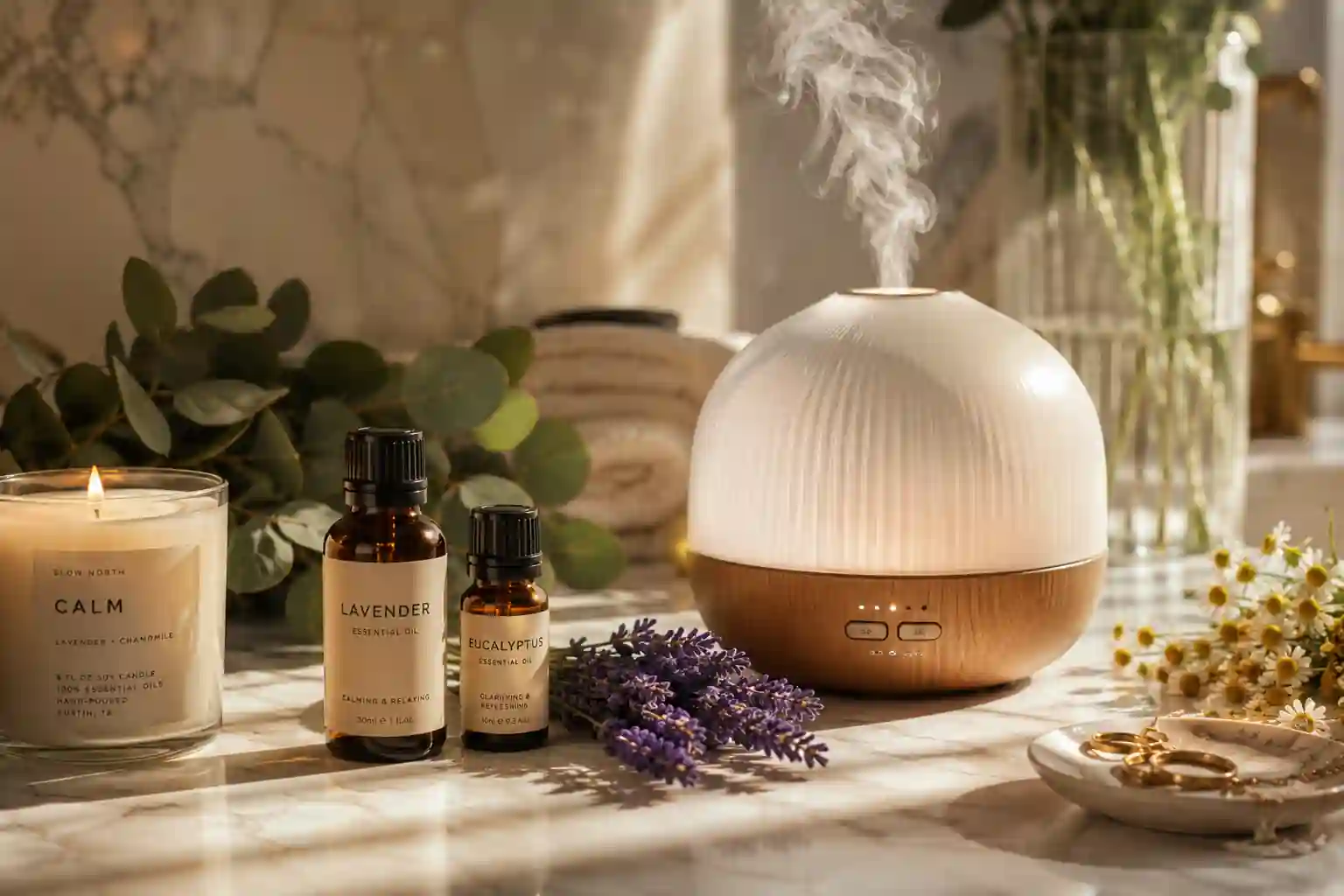
Benefits of Aromatherapy
Aromatherapy is most commonly used to support relaxation and emotional well-being.
Stress Management
Many people use aromatherapy as part of a daily stress-management routine.
Popular oils include:
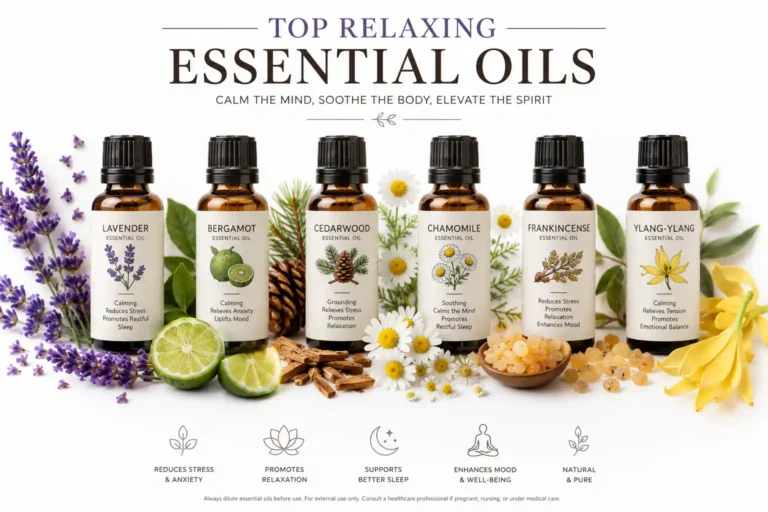
- Lavender
- Bergamot
- Frankincense
- Ylang-Ylang
Potential benefits:
- Calmer environment
- Reduced tension
- Improved relaxation rituals
Better Sleep Quality
Sleep-focused aromatherapy routines often include:
- Lavender oil
- Roman chamomile
- Cedarwood
- Sandalwood
These oils are frequently used before bedtime through diffusers, pillow sprays, or bath routines.
Mood Enhancement
Certain scents may help create a more positive atmosphere.
Examples include:
| Essential Oil | Common Mood Association |
| Sweet Orange | Uplifting |
| Lemon | Refreshing |
| Grapefruit | Energizing |
| Bergamot | Balancing |
Relaxation During Meditation
Aromatherapy is often paired with:
- Yoga
- Mindfulness
- Deep breathing
- Meditation
This combination can help establish a consistent relaxation routine.
Home Environment Improvement
Diffusing essential oils can help:
- Create pleasant aromas
- Replace synthetic fragrances
- Personalize indoor spaces
Who Should Use Aromatherapy?
Aromatherapy may be beneficial for individuals seeking natural wellness practices.
Suitable users include:
Busy Professionals
Useful for:
- Evening relaxation
- Work-from-home environments
- Stress reduction routines
Students
May support:
- Study rituals
- Relaxation after exams
- Focus-oriented environments
Wellness Enthusiasts
Aromatherapy complements:
- Yoga
- Meditation
- Spa routines
- Self-care practices
Sleep-Focused Individuals
Many people incorporate aromatherapy into nighttime rituals to create a calming atmosphere before bed.
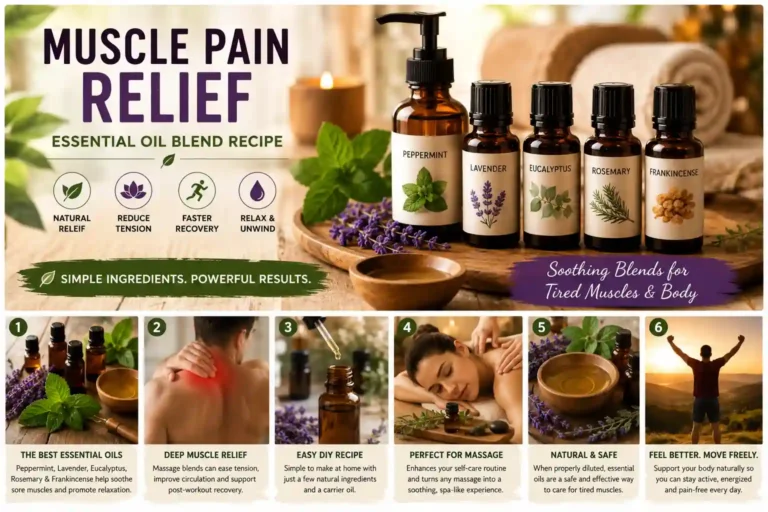
Best Types of Essential Oils
Different essential oils offer different aromatic experiences.
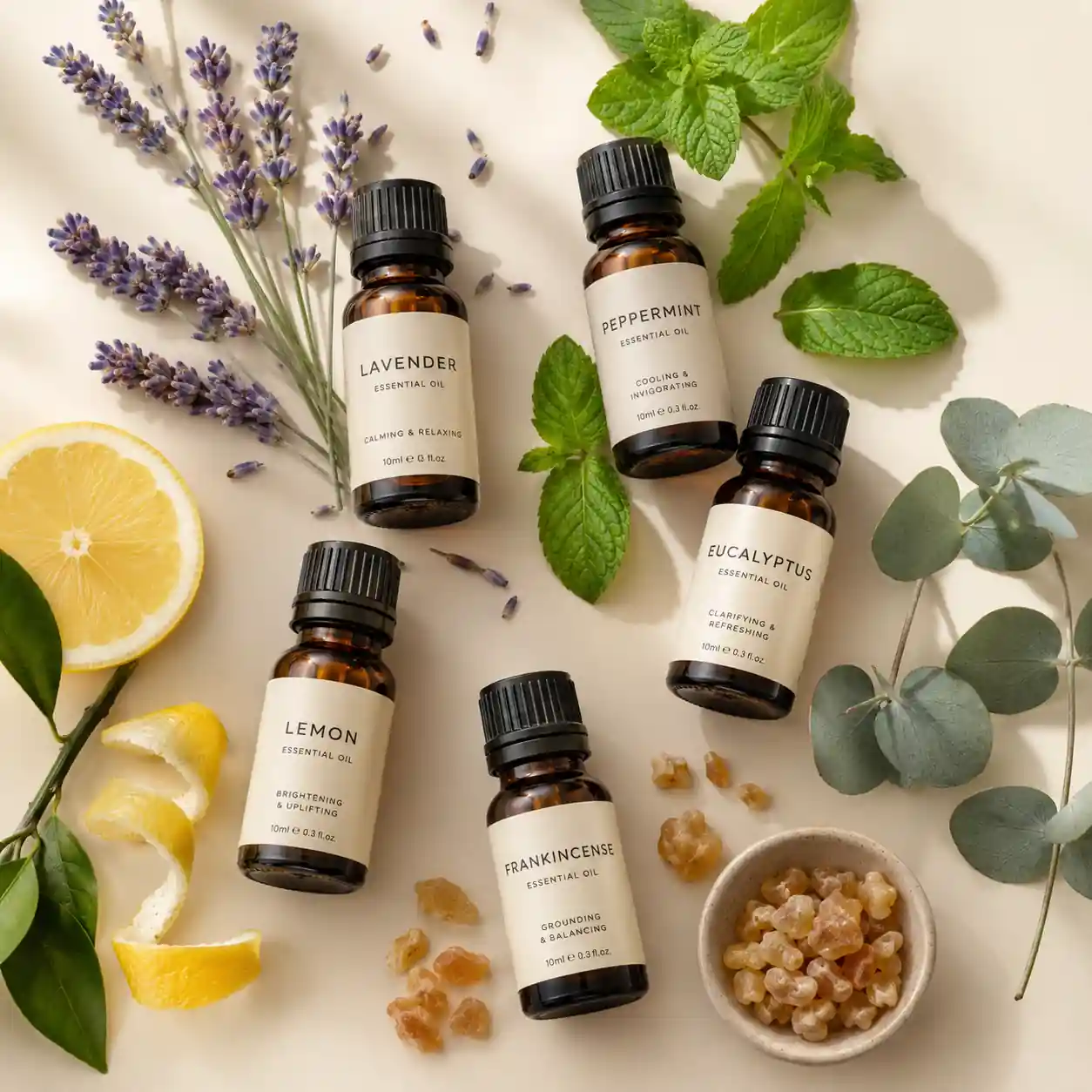
Lavender Essential Oil
Often considered the most versatile aromatherapy oil.
Common uses:
- Relaxation
- Bedtime routines
- Massage blends
Pros
- Beginner friendly
- Widely available
- Pleasant scent
Cons
- Scent preference varies
Peppermint Essential Oil
Known for its refreshing aroma.
Common uses:
- Morning routines
- Workspace diffusion
- Aromatic inhalation
Pros
- Fresh scent
- Popular for focus-oriented environments
Cons
- Strong aroma
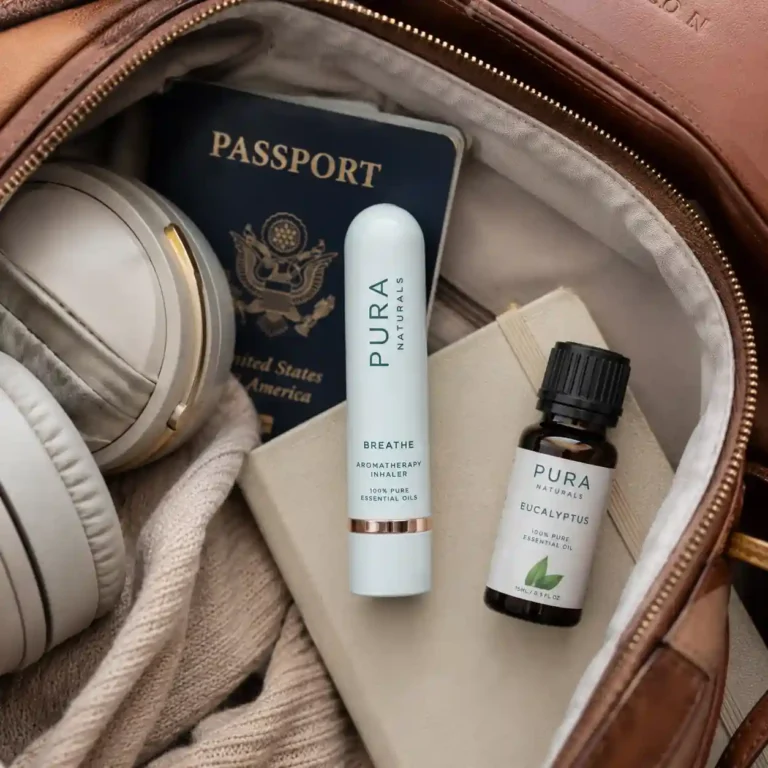
Eucalyptus Essential Oil
Recognized for its clean, crisp fragrance.
Common uses:
- Shower aromatherapy
- Steam inhalation
- Spa environments
Pros
- Refreshing scent
- Popular in wellness settings
Cons
- Can be intense for some users
Lemon Essential Oil
A bright citrus oil frequently used for uplifting environments.
Pros
- Fresh fragrance
- Pleasant room scent
Cons
- Aroma dissipates relatively quickly
Frankincense Essential Oil
Often used in meditation and mindfulness practices.
Pros
- Rich aroma
- Popular for relaxation
Cons
- Higher price point
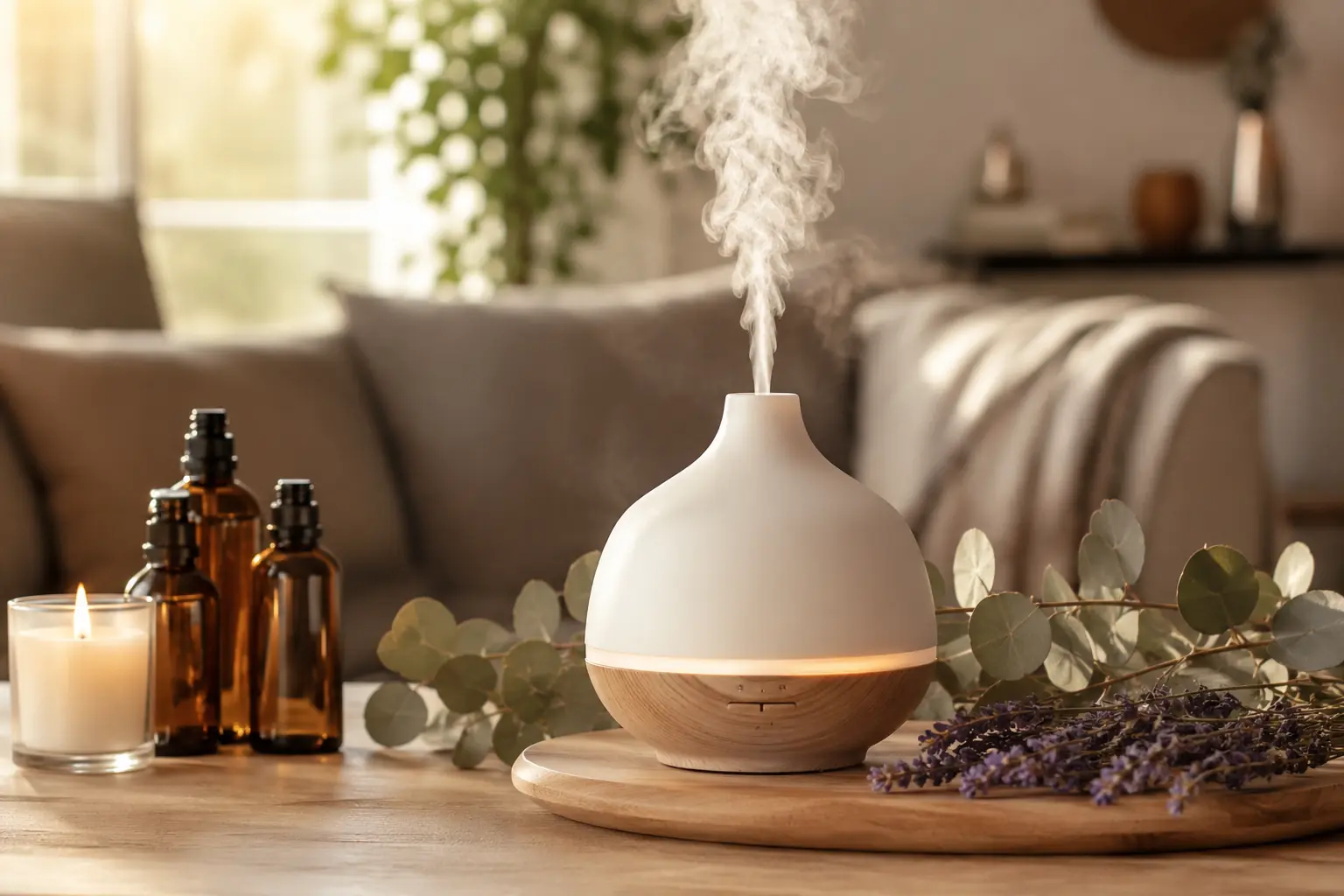
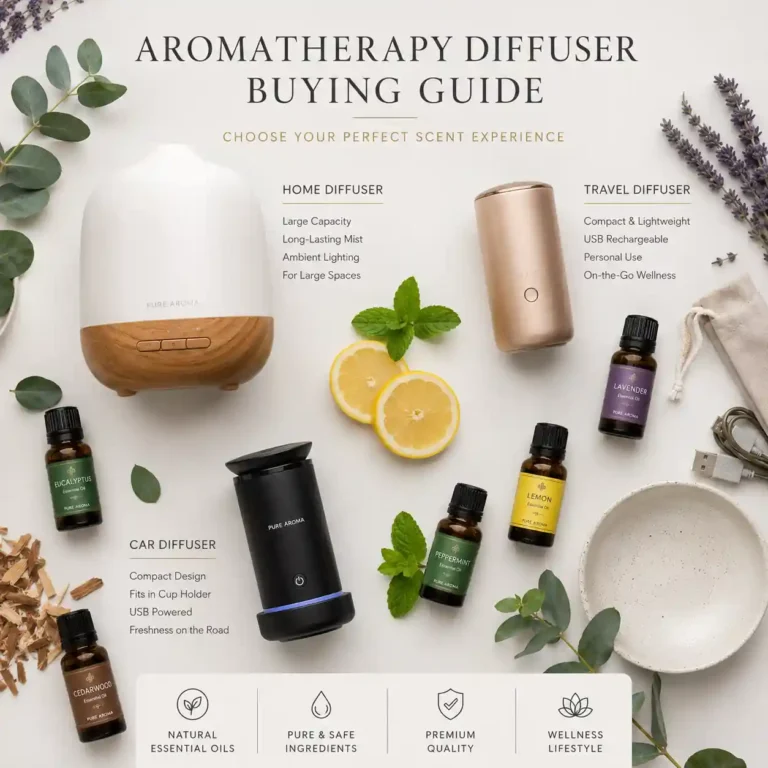
Best Diffusers for Aromatherapy
Choosing the right diffuser significantly affects your experience.
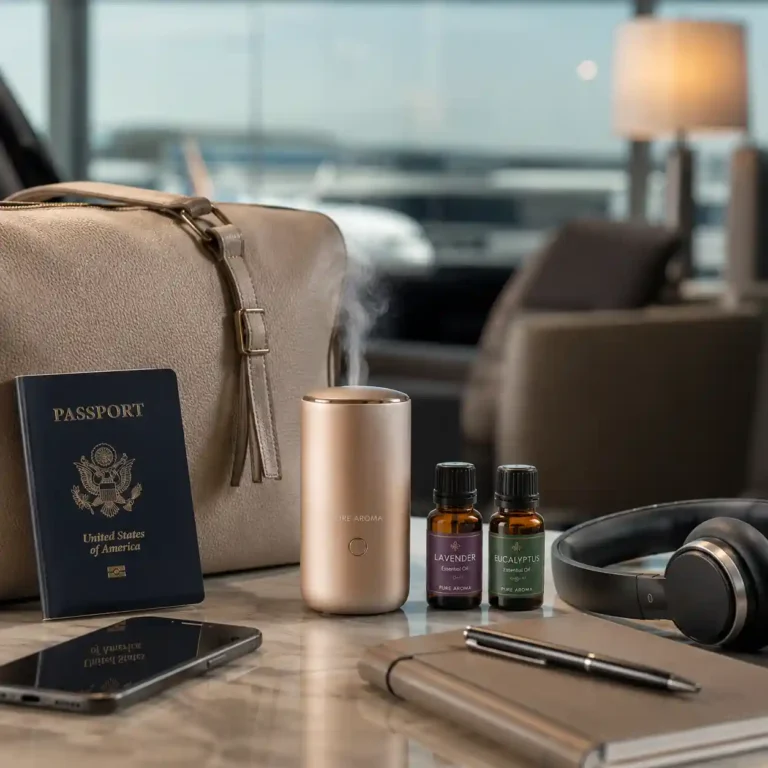
Ultrasonic Diffusers
Most popular option.
Advantages
- Quiet operation
- Humidification effect
- Affordable
Best For
- Bedrooms
- Offices
- Living rooms
Nebulizing Diffusers
Use pure essential oils without water.
Advantages
- Strong aroma
- No dilution
Best For
- Large spaces
- Experienced users
Drawbacks
- Higher cost
- Uses more oil
Reed Diffusers
Passive diffusion method.
Advantages
- No electricity
- Continuous scent
Best For
- Bathrooms
- Small rooms
Heat Diffusers
Use gentle heat to disperse oils.
Advantages
- Simple operation
- Affordable
Drawbacks
- May alter aromatic compounds
How to Use Aromatherapy Properly
Following best practices improves both safety and effectiveness.
Step 1: Choose the Right Essential Oil
Select oils based on your goal:
| Goal | Recommended Oils |
| Relaxation | Lavender, Frankincense |
| Sleep | Chamomile, Cedarwood |
| Energy | Lemon, Grapefruit |
| Focus | Peppermint, Rosemary |
Step 2: Use Proper Dilution
Essential oils are highly concentrated.
Always dilute topical applications with carrier oils such as:
- Jojoba oil
- Sweet almond oil
- Coconut oil
Step 3: Start Small
Begin with:
- 2–4 diffuser drops
- Short diffusion sessions
Increase gradually if desired.
Step 4: Create Consistent Rituals
Examples include:
- Morning energy sessions
- Midday focus routines
- Evening relaxation rituals
- Bedtime aromatherapy
Common Mistakes to Avoid
Using Too Much Oil
More is not always better.
Excessive amounts may create overwhelming aromas.
Ignoring Dilution Guidelines
Undiluted topical application may increase irritation risk.
Buying Low-Quality Oils
Avoid products with:
- Artificial fragrances
- Unclear ingredients
- Missing botanical names
Expecting Instant Results
Aromatherapy often works best as part of a consistent wellness routine.
Using the Wrong Diffuser for Your Space
Match diffuser size to room dimensions for optimal performance.
Aromatherapy vs Alternatives
| Feature | Aromatherapy | Scented Candles | Room Sprays |
| Natural Plant Extracts | Yes | Sometimes | Sometimes |
| Customizable | High | Low | Medium |
| Diffuser Options | Yes | No | No |
| Long-Term Cost | Moderate | Moderate | Moderate |
| Wellness Ritual Integration | Excellent | Limited | Limited |
Many users prefer aromatherapy because it offers greater control over scent combinations and application methods.
What to Look for Before Buying Essential Oils
Not all essential oils are created equal.
Botanical Name
Look for the scientific plant name on the label.
Example:
Lavandula angustifolia (Lavender)
Extraction Method
Preferred methods include:
- Steam distillation
- Cold pressing
Purity
Choose oils labeled:
- 100% pure essential oil
- No synthetic fragrance added
Packaging
High-quality oils are typically sold in:
- Dark amber bottles
- UV-protective containers
Third-Party Testing
Independent testing may help verify product quality and purity.
Recommended Features in Aromatherapy Products
For Diffusers
Look for:
- Auto shut-off
- Adjustable mist settings
- Quiet operation
- Timer controls
- Large water reservoir
For Essential Oils
Prioritize:
- Purity testing
- Clear sourcing information
- Ingredient transparency
- Proper labeling
Product Comparison Factors
Before purchasing, compare:
| Factor | Why It Matters |
| Purity | Product quality |
| Price Per Ounce | Value |
| Testing Standards | Reliability |
| Bottle Size | Usage frequency |
| Brand Transparency | Consumer confidence |
Expert Tips for Better Aromatherapy Results
- Rotate oils seasonally.
- Use citrus oils during daytime routines.
- Reserve calming oils for evenings.
- Keep oils stored away from sunlight.
- Clean diffusers regularly.
- Blend complementary scents.
- Start with single-oil experiments before creating blends.
- Use aromatherapy alongside relaxation techniques rather than relying on scent alone.
Frequently Asked Questions (FAQs)
Is aromatherapy scientifically proven?
Research suggests that certain essential oils may influence mood, relaxation, sleep quality, and perceived stress levels through olfactory pathways. However, aromatherapy should be viewed as a complementary wellness practice rather than a replacement for professional medical treatment. Results vary between individuals, and more large-scale studies are needed for many specific claims.
Which essential oil is best for relaxation?
Lavender is widely regarded as one of the most popular and versatile essential oils for relaxation. Other commonly used options include:
- Roman chamomile
- Frankincense
- Ylang-ylang
- Bergamot
- Sandalwood
The best choice often depends on personal scent preference and individual response.
Can aromatherapy help with sleep?
Many people use aromatherapy as part of a bedtime routine. Essential oils frequently associated with sleep-supportive environments include:
- Lavender
- Cedarwood
- Roman chamomile
- Vetiver
- Sandalwood
For best results, combine aromatherapy with healthy sleep habits such as consistent bedtimes and reduced screen exposure before sleep.
What is the safest way to use essential oils?
The safest methods include:
- Diffusion according to manufacturer instructions.
- Proper dilution with carrier oils before topical use.
- Following product safety guidelines.
- Performing a patch test before skin application.
Avoid ingesting essential oils unless specifically advised by a qualified healthcare professional.
How many drops of essential oil should I use in a diffuser?
Most ultrasonic diffusers work well with:
- Small room: 3–5 drops
- Medium room: 5–8 drops
- Large room: 8–12 drops
Always follow the diffuser manufacturer’s recommendations, as capacity varies by model.
What’s the difference between fragrance oils and essential oils?
| Feature | Essential Oils | Fragrance Oils |
|---|---|---|
| Source | Plant-derived | Often synthetic |
| Natural Aromatic Compounds | Yes | Not always |
| Aromatherapy Use | Yes | Generally no |
| Botanical Origin | Identifiable | May be artificial |
| Wellness Applications | Common | Limited |
For authentic aromatherapy practices, pure essential oils are generally preferred.
Are expensive essential oils always better?
Not necessarily.
Price may reflect:
- Plant rarity
- Yield per harvest
- Production complexity
- Geographic sourcing
Quality should be assessed based on:
- Purity
- Testing standards
- Transparency
- Extraction methods
rather than price alone.
Can I blend multiple essential oils together?
Yes. Blending is a common aromatherapy practice.
Popular combinations include:
Relaxation Blend
- Lavender
- Frankincense
- Cedarwood
Uplifting Blend
- Sweet Orange
- Lemon
- Grapefruit
Focus Blend
- Peppermint
- Rosemary
- Lemon
Start with small quantities until you find combinations you enjoy.
How long do essential oils last?
Most essential oils remain usable for 1–5 years depending on:
- Oil type
- Storage conditions
- Exposure to air
- Exposure to sunlight
Citrus oils generally have shorter shelf lives, while oils such as sandalwood and patchouli often last longer.
Store oils in cool, dark environments for maximum longevity.
Which diffuser is best for beginners?
Ultrasonic diffusers are typically the best starting point because they offer:
- Easy operation
- Affordable pricing
- Quiet performance
- Good scent distribution
- Water-based diffusion
They provide an excellent balance of convenience and effectiveness for most households.
Can aromatherapy replace medical treatment?
No.
Aromatherapy should be viewed as a complementary wellness practice that may support relaxation, comfort, and self-care routines. It should not replace diagnosis, treatment, or advice from qualified healthcare professionals.
Is aromatherapy suitable for everyday use?
For most healthy adults, aromatherapy can be incorporated into daily wellness routines when used according to product directions and safety guidelines.
Many users enjoy:
- Morning energy blends
- Midday focus sessions
- Evening relaxation rituals
- Bedtime diffusion
Moderation and proper use remain important.
Final Verdict
Aromatherapy remains one of the most accessible and versatile wellness practices available today. By using carefully selected essential oils, quality diffusers, and consistent relaxation routines, many people create environments that support calmness, mindfulness, and overall well-being.
The most effective aromatherapy approach focuses on three fundamentals:
- Choosing high-quality essential oils.
- Using appropriate diffusion or application methods.
- Creating consistent wellness rituals.
For beginners, lavender, lemon, peppermint, and frankincense provide an excellent starting collection. Pair these oils with a reliable ultrasonic diffuser, follow safe usage practices, and experiment gradually to discover which scents best support your personal goals.
Ultimately, the value of aromatherapy lies not only in the oils themselves but also in the intentional moments of relaxation, mindfulness, and self-care they help create.