Carrier Oil for Essential Oils: The Complete Guide to Safe Dilution, Better Blends, and Healthier Skin
Have you ever opened a bottle of your favorite essential oil, eager to enjoy its soothing aroma or skin-loving benefits, only to wonder, “Can I apply this directly?” You’re not alone. Many people discover essential oils through aromatherapy or natural skincare but quickly realize there’s an important missing piece: carrier oils.
A carrier oil for essential oils is more than just a diluting ingredient—it’s the foundation of safe, effective, and nourishing essential oil use. Whether you’re creating a relaxing massage blend, a roller bottle for everyday wellness, or a facial serum, the right carrier oil helps essential oils spread evenly, reduces the risk of skin irritation, and often provides impressive skincare benefits of its own.
From lightweight jojoba oil to deeply moisturizing avocado oil, choosing the best base oil depends on your skin type, intended use, and the essential oils you’re blending. This guide explains everything you need to know, including how to dilute essential oils correctly, the best carrier oils for different applications, dilution ratios, safety tips, and practical recipes backed by dermatology and aromatherapy best practices.
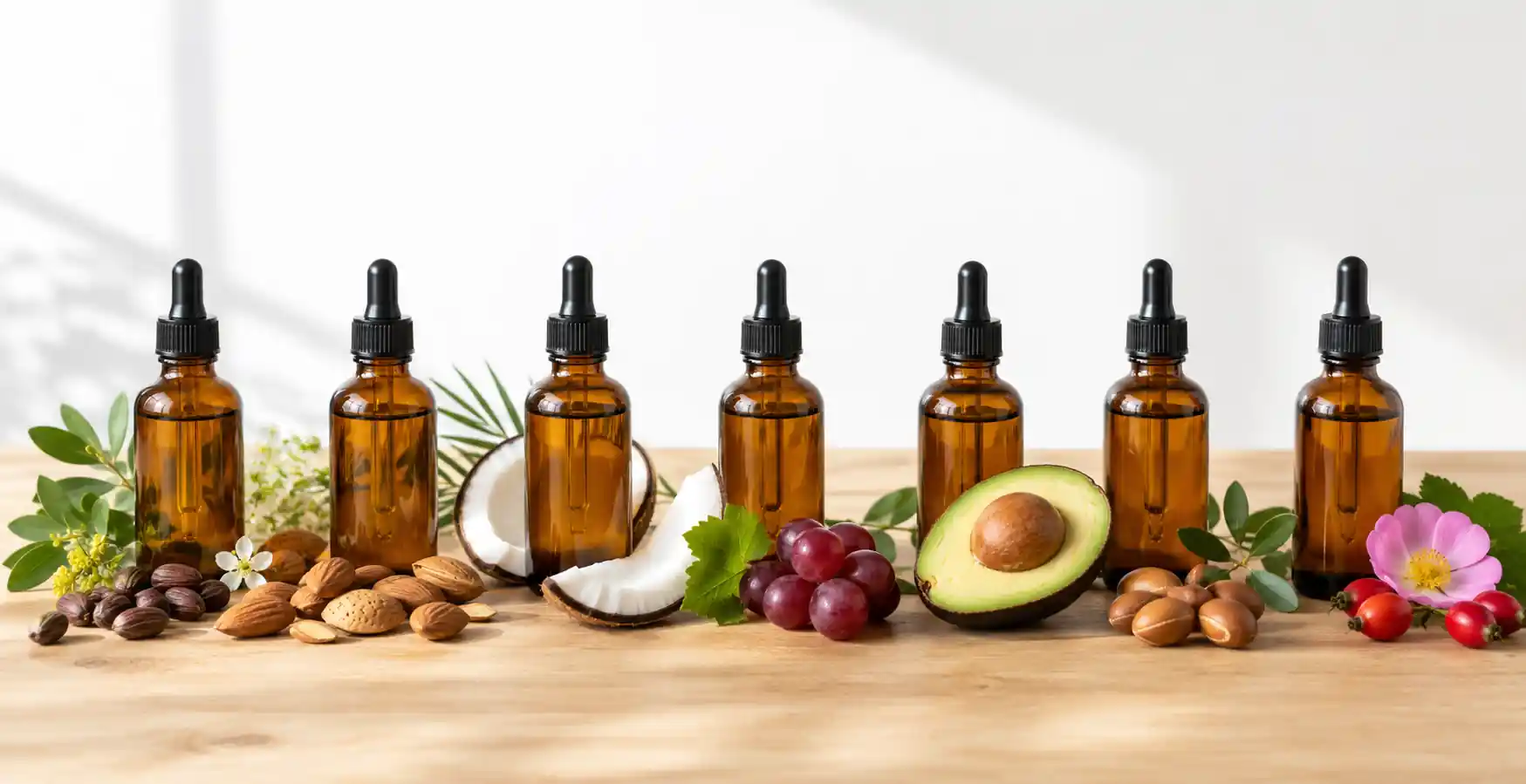
A carrier oil for essential oils is a plant-based oil used to dilute concentrated essential oils before they are applied to the skin. Carrier oils such as jojoba, sweet almond, coconut, grapeseed, and avocado oil help reduce skin irritation, improve absorption, and add moisturizing nutrients. Most adults should use a 1–2% dilution, which equals approximately 6–12 drops of essential oil per ounce (30 mL) of carrier oil, depending on the intended use.
Key Takeaways
- Carrier oils dilute essential oils, making them safer for topical use.
- Different carrier oils provide unique skincare benefits, from lightweight hydration to deep nourishment.
- A 1–2% dilution is appropriate for most daily skincare and massage applications.
- Jojoba, sweet almond, fractionated coconut, grapeseed, and avocado oils are among the most versatile carrier oils.
- Carrier oils improve glide during massage while helping essential oils spread evenly across the skin.
- Choosing a carrier oil based on your skin type can improve comfort and overall results.
- Proper storage and dilution preserve both safety and effectiveness.
What Is a Carrier Oil?
A carrier oil is a vegetable oil extracted primarily from the seeds, kernels, or nuts of plants. Unlike essential oils, carrier oils are not highly volatile and contain very little aroma. Their primary purpose is to safely “carry” essential oils onto the skin while reducing their concentration.
Because essential oils are extremely potent plant extracts, applying them directly to the skin may cause irritation, redness, or allergic reactions in some individuals. Mixing essential oils with a carrier oil creates a safer blend while also improving spreadability and skin comfort.
Simply put:
- Essential oils provide concentrated aromatic compounds.
- Carrier oils provide nourishment, dilution, and skin protection.
Think of essential oils as powerful active ingredients and carrier oils as the supportive base that allows those ingredients to work more comfortably.
What Does Carrier Oil Mean?
The term carrier oil comes from its role in carrying essential oils across the skin safely. Rather than altering the therapeutic properties of an essential oil, the carrier oil helps distribute it over a larger surface area while lowering the concentration.
Carrier oils also:
- Improve slip during massage
- Lock moisture into the skin
- Support the skin barrier
- Reduce evaporation of essential oils
- Help create stable blends for rollers, serums, and massage oils
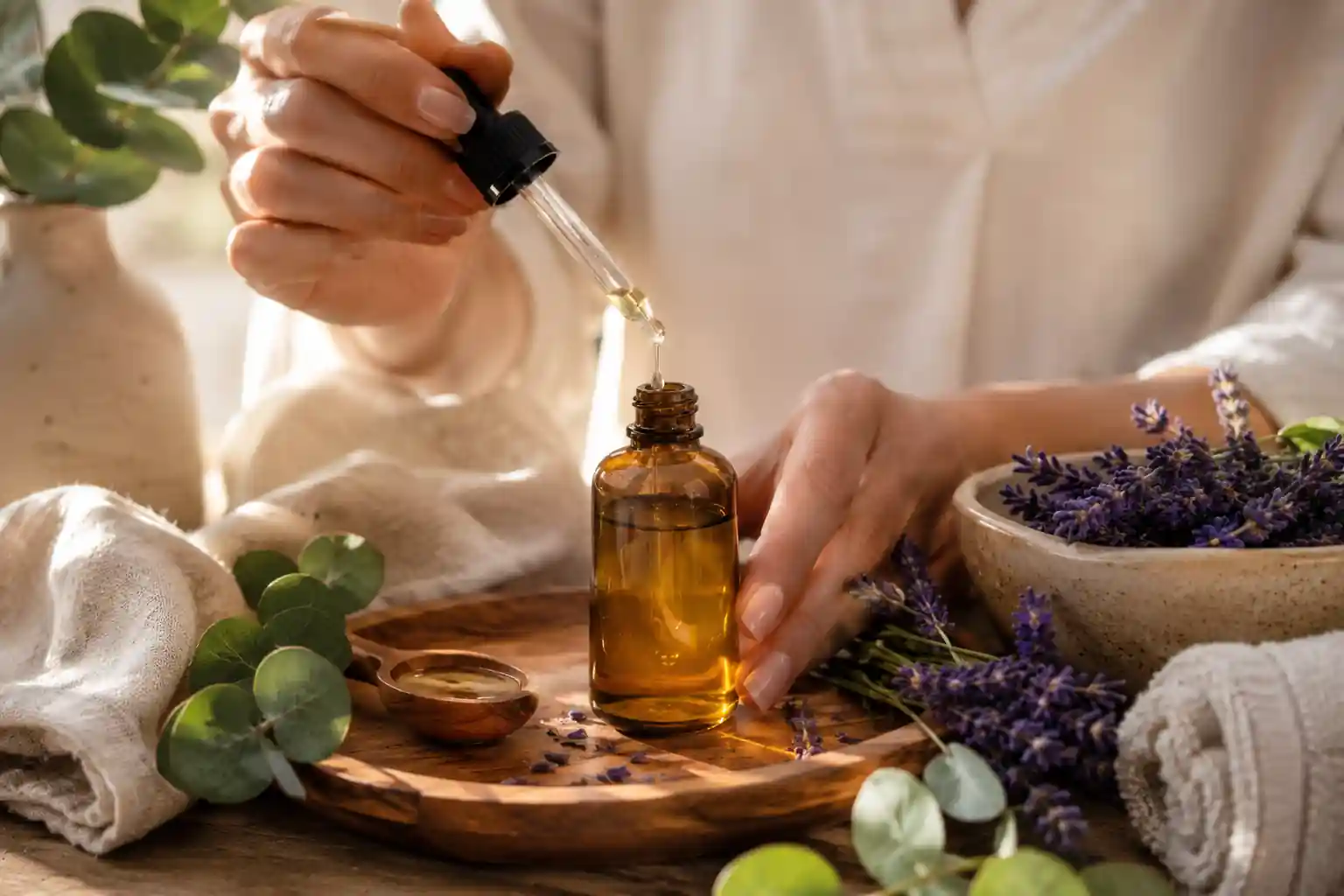
Why Do Essential Oils Need a Carrier Oil?
Essential oils contain highly concentrated aromatic molecules extracted from flowers, leaves, bark, roots, and other plant materials. Producing just a small bottle often requires hundreds or even thousands of pounds of plant material.
That concentration is exactly why dilution matters.
Without a carrier oil, essential oils may:
- Cause skin irritation
- Trigger allergic reactions
- Increase photosensitivity (especially citrus oils)
- Feel excessively strong on sensitive skin
- Evaporate more quickly
Adding a carrier oil helps create a balanced mixture that’s easier and safer to apply while maintaining the aromatic experience.
How Carrier Oils Work with Essential Oils
Carrier oils and essential oils complement one another rather than competing.
Carrier oils contain beneficial compounds such as:
- Essential fatty acids
- Vitamin E
- Phytosterols
- Antioxidants
- Plant lipids
These ingredients nourish the skin while essential oils contribute their characteristic aromas and, depending on the oil, may support relaxation, invigorating routines, or skincare goals.
For example:
- Lavender essential oil combined with jojoba oil creates a calming facial oil.
- Eucalyptus oil blended with fractionated coconut oil works well in massage applications.
- Frankincense essential oil paired with rosehip oil is a popular choice in mature skincare routines.
The combination often performs better than using either ingredient alone.
Benefits of Using a Carrier Oil for Essential Oils
Choosing the right base oil offers advantages that go far beyond simple dilution.
1. Improves Skin Safety
The biggest reason to dilute essential oils is reducing the likelihood of irritation.
Dermatologists frequently recommend patch testing new skincare products, particularly those containing fragrant plant extracts. Proper dilution significantly lowers the concentration contacting the skin.
2. Adds Moisture
Most carrier oils naturally contain fatty acids that help reduce moisture loss from the skin.
Examples include:
- Oleic acid
- Linoleic acid
- Palmitic acid
These lipids support the skin’s natural barrier, making carrier oils valuable even without essential oils.
3. Enhances Massage
Carrier oils provide excellent glide, allowing hands to move smoothly across the skin without excessive friction.
This is why nearly every professional massage oil begins with a carrier oil rather than essential oils alone.
4. Supports Better Essential Oil Distribution
Instead of creating concentrated “hot spots,” a carrier oil spreads essential oils evenly across the skin.
This creates:
- More comfortable application
- Better coverage
- More consistent aroma
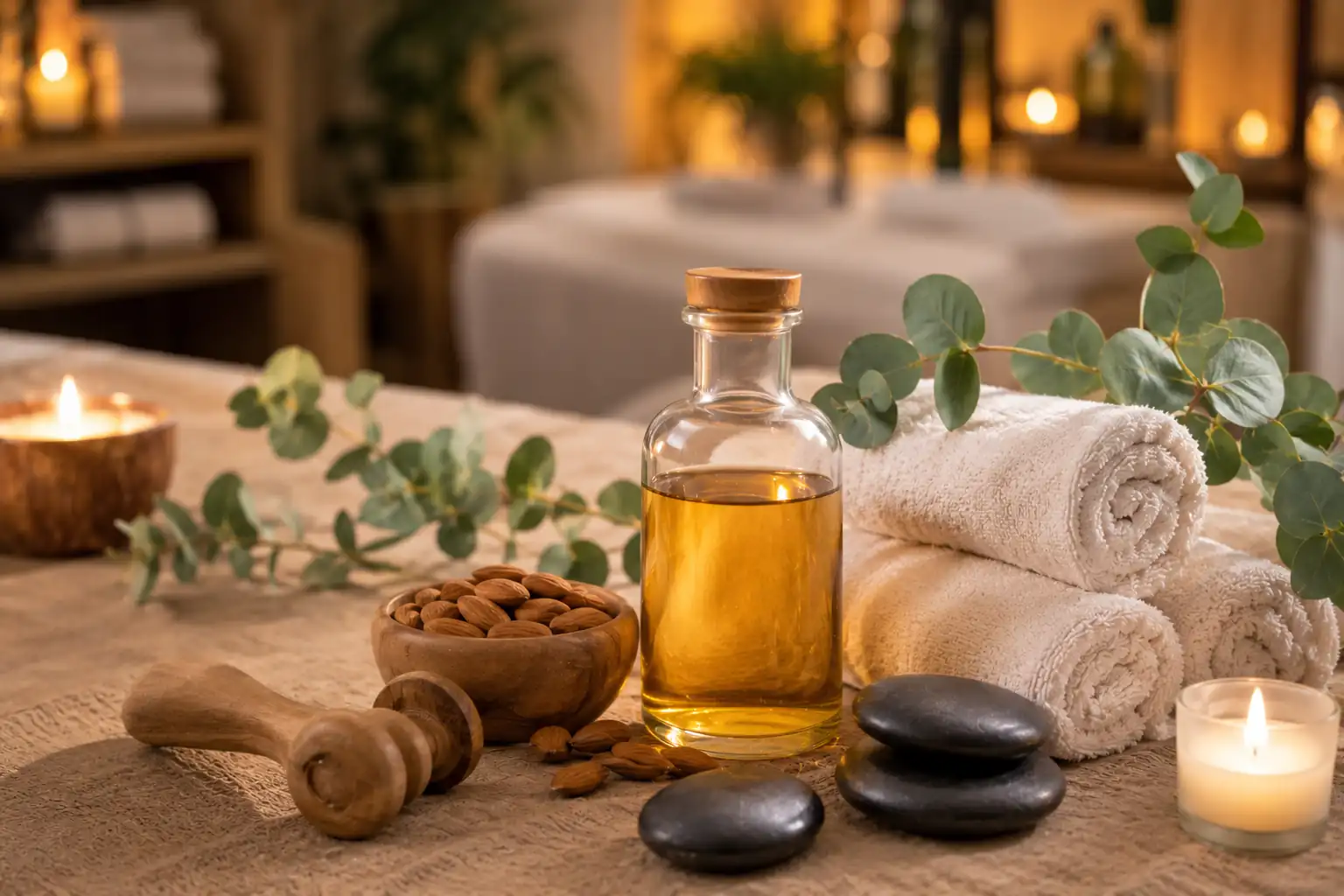
5. Adds Nutritional Value
Many carrier oils contain naturally occurring nutrients that support healthy-looking skin.
Some examples include:
| Carrier Oil | Naturally Contains |
|---|---|
| Jojoba Oil | Vitamin E, wax esters |
| Rosehip Oil | Vitamins A and E, essential fatty acids |
| Avocado Oil | Vitamins A, D, E |
| Sweet Almond Oil | Vitamin E, oleic acid |
| Argan Oil | Vitamin E, antioxidants |
The Science Behind Carrier Oils
While essential oils have received considerable research attention, carrier oils themselves are also well studied in dermatology.
Scientific literature has shown that plant oils can:
- Improve skin hydration
- Support barrier repair
- Reduce transepidermal water loss (TEWL)
- Deliver beneficial fatty acids
- Help maintain skin elasticity
Research published in dermatology journals highlights that oils rich in linoleic acid may be particularly beneficial for maintaining a healthy skin barrier, while oils containing antioxidants such as vitamin E help protect the skin from environmental stressors.
It’s important to note that carrier oils are not medicines, but they can play a meaningful role in supporting healthy skin when incorporated into a balanced skincare routine.
Can You Mix Essential Oils Without a Carrier Oil?
In most cases, no.
For topical use, undiluted essential oils are generally not recommended unless specifically directed by a qualified healthcare professional or unless an individual oil has established safety guidance for limited spot use.
Most aromatherapy organizations recommend dilution before skin application.
Using a carrier oil is especially important for:
- Children
- Older adults
- Sensitive skin
- Facial skincare
- Daily use
- Massage
- Large skin areas
Diffusers are different because essential oils are dispersed into the air rather than applied directly to the skin.
Can Coconut Oil Be a Carrier Oil?
Yes. Coconut oil is one of the world’s most popular carrier oils.
However, there are two common forms:
Virgin Coconut Oil
- Solid below approximately 76°F (24°C)
- Rich coconut aroma
- Highly moisturizing
- Excellent for body care
- Can feel heavy for some facial skin types
Fractionated Coconut Oil
- Always liquid
- Virtually odorless
- Lightweight
- Long shelf life
- Excellent for massage oils
- Popular for roller bottles
Fractionated coconut oil is often preferred when blending essential oils because it mixes easily and remains liquid year-round.
Is Jojoba Oil a Carrier Oil?
Absolutely.
In fact, jojoba is considered one of the best carrier oils available.
Although commonly called an oil, jojoba is technically a liquid wax. Its composition closely resembles human sebum, making it compatible with many skin types.
Benefits include:
- Lightweight feel
- Fast absorption
- Long shelf life
- Suitable for facial skincare
- Less greasy than many vegetable oils
Because of these characteristics, jojoba is frequently chosen for essential oil roller blends and facial serums.
Is Olive Oil a Good Carrier Oil?
Yes, olive oil can serve as a carrier oil, particularly for body massage and dry skin.
Advantages include:
- Rich in antioxidants
- Contains vitamin E
- Readily available
- Deeply moisturizing
Potential drawbacks include:
- Heavier texture
- Distinct aroma
- Slower absorption
- May not be ideal for acne-prone facial skin
Many people reserve olive oil for body applications while choosing lighter oils such as jojoba or grapeseed for the face.
Is Avocado Oil a Carrier Oil?
Yes.
Avocado oil is an exceptionally nourishing carrier oil rich in vitamins and healthy fats.
It is often recommended for:
- Dry skin
- Mature skin
- Rough elbows
- Cracked heels
- Winter skincare
- Rich overnight oil blends
Because of its heavier consistency, many people blend avocado oil with lighter carrier oils for a more balanced texture.
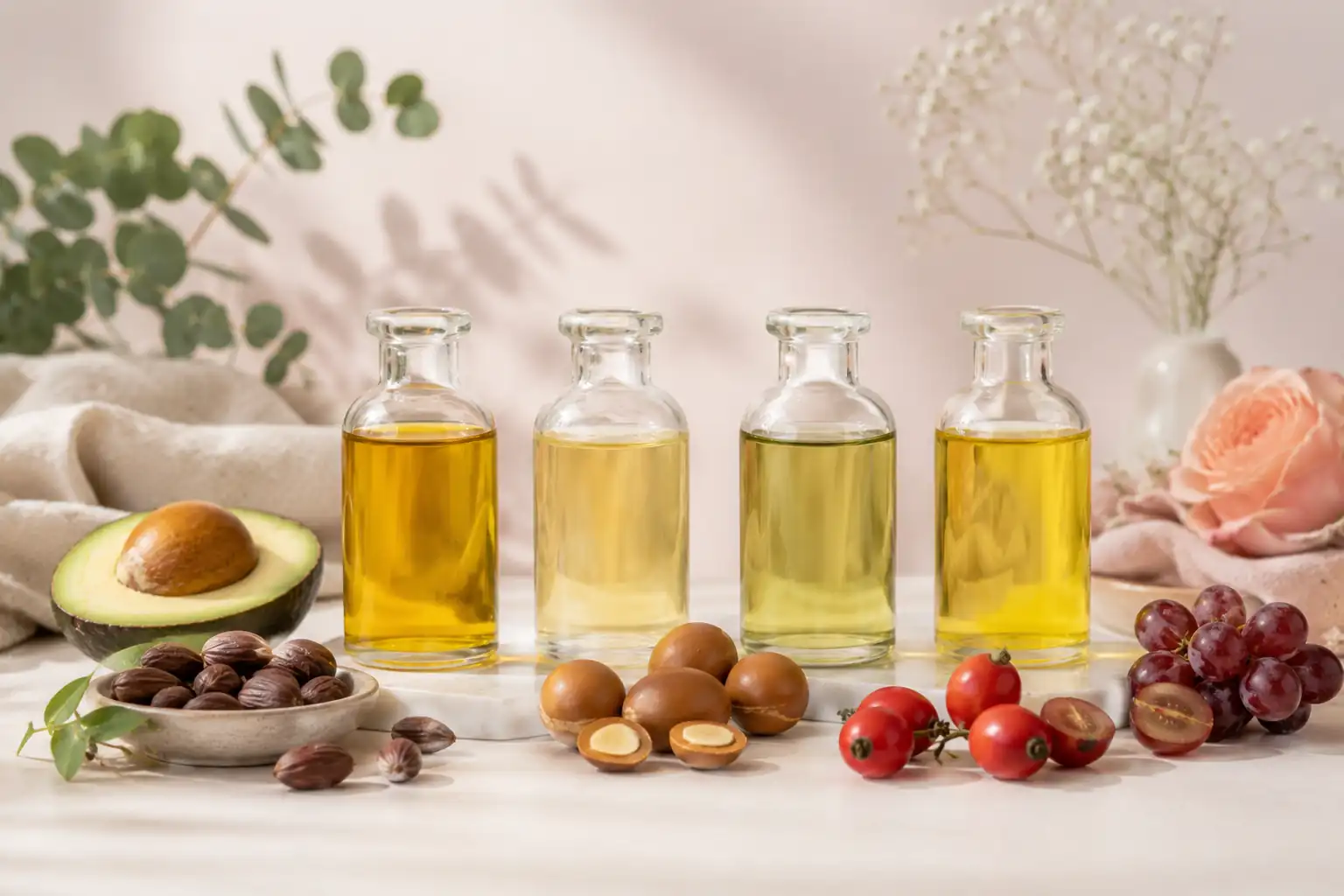
Choosing the Best Carrier Oil for Essential Oils
There isn’t a single “best” carrier oil for every situation. The ideal choice depends on your skin type, the essential oils you’re using, and whether you’re creating a facial serum, massage oil, body moisturizer, or roller bottle.
Some carrier oils absorb quickly and leave almost no residue, while others create a rich protective barrier that’s perfect for very dry skin.
When selecting a base oil, consider:
- Your skin type
- Desired absorption speed
- Shelf life
- Natural scent
- Nutrient profile
- Intended use (massage, face, body, hair, or rollers)
The good news? Most carrier oils can be mixed together, allowing you to customize the texture and benefits of your blends.
Comparison Table: Best Carrier Oils for Essential Oils
| Carrier Oil | Texture | Absorption | Best For | Shelf Life | Comedogenic Rating* |
|---|---|---|---|---|---|
| Jojoba Oil | Very light | Fast | All skin types, face, rollers | 3–5 years | Very low |
| Sweet Almond Oil | Medium | Moderate | Massage, dry skin | 1–2 years | Low |
| Fractionated Coconut Oil | Very light | Fast | Massage, rollers, body | 2+ years | Very low |
| Virgin Coconut Oil | Rich | Slow | Dry body skin | 2 years | Moderate |
| Grapeseed Oil | Light | Fast | Oily and acne-prone skin | 6–12 months | Very low |
| Avocado Oil | Rich | Slow | Mature, dry skin | 1 year | Moderate |
| Olive Oil | Heavy | Slow | Body massage, dry skin | 1–2 years | Moderate |
| Rosehip Oil | Light | Moderate | Facial care, mature skin | 6–12 months | Low |
| Argan Oil | Medium-light | Moderate | Face, hair, aging skin | 1–2 years | Low |
*Comedogenic ratings are estimates and don’t predict how every individual’s skin will respond.
Best Carrier Oil for Different Skin Types
Best for Oily Skin
People with oily skin often avoid facial oils, but the right carrier oil can actually complement a skincare routine without feeling greasy.
Recommended options include:
- Jojoba oil
- Grapeseed oil
- Hemp seed oil
- Rosehip oil
These oils absorb quickly and have lightweight textures that many users find comfortable.
Best for Dry Skin
Dry skin benefits from oils rich in oleic acid and nourishing lipids.
Excellent choices include:
- Avocado oil
- Sweet almond oil
- Olive oil
- Argan oil
For extra nourishment, many people combine avocado oil with jojoba for a smoother finish.
Best for Sensitive Skin
Sensitive skin often responds best to simple formulations.
Try:
- Jojoba oil
- Apricot kernel oil
- Fractionated coconut oil
Always patch test any new blend, even if the ingredients are considered gentle.
Best for Mature Skin
Skin naturally loses moisture and elasticity with age.
Popular carrier oils include:
- Rosehip oil
- Argan oil
- Avocado oil
- Jojoba oil
These oils are rich in antioxidants and essential fatty acids that help support a healthy skin barrier.
Best for Massage
Massage oils should provide enough glide without becoming excessively greasy.
Top choices include:
- Fractionated coconut oil
- Sweet almond oil
- Jojoba oil
- Grapeseed oil
- Apricot kernel oil
Professional massage therapists often combine two or more carrier oils to achieve the ideal balance of slip and absorption.
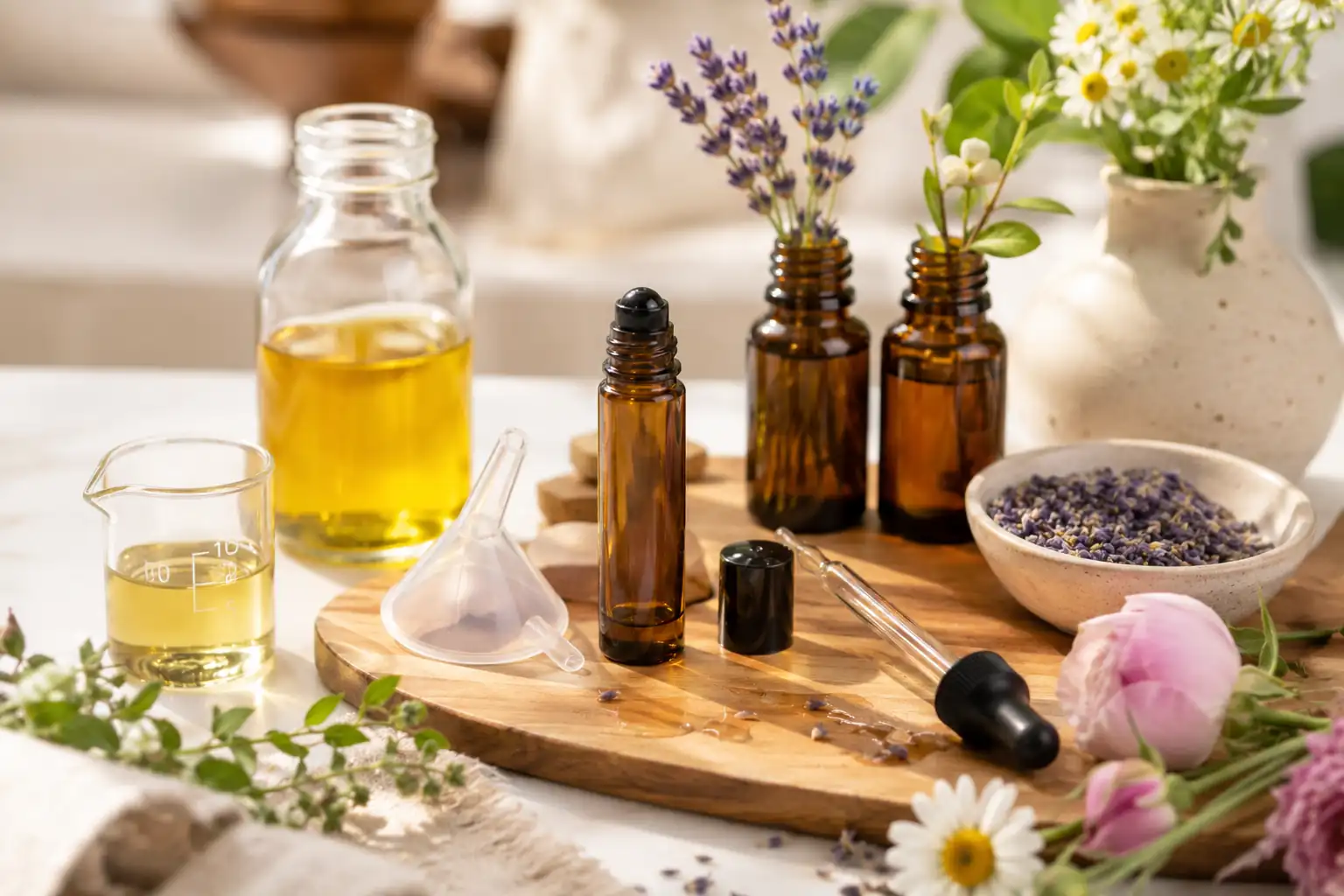
Which Carrier Oil Is Best for Massage?
If your primary goal is massage, here is a quick comparison.
| Carrier Oil | Massage Quality | Absorption | Best Uses |
|---|---|---|---|
| Fractionated Coconut | Excellent | Fast | Full-body massage |
| Sweet Almond | Excellent | Moderate | Relaxation massage |
| Jojoba | Excellent | Moderate | Facial and body massage |
| Grapeseed | Very Good | Fast | Sports massage |
| Olive Oil | Good | Slow | Deep moisturizing massage |
For long massage sessions, sweet almond oil remains one of the most widely used professional options because it offers excellent glide without feeling excessively heavy.
What Is the Best Oil to Mix Essential Oils With?
If you’re looking for one versatile option, jojoba oil is often considered the gold standard.
Why?
- Suitable for nearly every skin type
- Long shelf life
- Mild scent
- Doesn’t easily become rancid
- Excellent for facial skincare
- Works well in roller bottles
- Blends beautifully with nearly every essential oil
If you’re making massage oils, sweet almond and fractionated coconut oil are equally excellent choices.
How to Dilute Essential Oils
Diluting essential oils is surprisingly simple once you understand percentages.
A dilution percentage tells you how much essential oil is present in the finished blend.
The higher the percentage, the stronger the mixture.
For everyday topical use, lower concentrations are usually sufficient.
Carrier Oil to Essential Oil Ratio
Recommended Dilution Guide
| Dilution | Essential Oil per 1 oz (30 mL) Carrier Oil | Best For |
|---|---|---|
| 0.5% | 3 drops | Very sensitive skin |
| 1% | 6 drops | Daily facial use |
| 2% | 12 drops | General adult body care |
| 3% | 18 drops | Short-term body massage |
| 5% | 30 drops | Spot applications (when appropriate) |
These are general aromatherapy guidelines and may need adjustment depending on the specific essential oil and user.
How Much Carrier Oil to Essential Oil?
One of the most common questions is:
How much essential oil should I add to carrier oil?
For most adults:
- Face: 1% dilution
- Daily body oil: 2%
- Massage oil: 2–3%
- Roller bottle: 2–3%
- Sensitive skin: 0.5–1%
When in doubt, start lower. You can always create a stronger blend later if appropriate.
How to Dilute Essential Oils for Skin
Follow these simple steps:
Step 1
Choose a clean glass bottle.
Amber or cobalt bottles help protect oils from light exposure.
Step 2
Measure your carrier oil.
Example:
30 mL jojoba oil
Step 3
Add essential oils using the correct dilution chart.
For a 2% blend:
12 drops total essential oil
Step 4
Close tightly.
Shake gently for about 30 seconds.
Step 5
Label the bottle with:
- Ingredients
- Dilution percentage
- Date made
Store in a cool, dark location.
How Do You Mix Essential Oils with Carrier Oils?
The process is straightforward.
- Select your carrier oil.
- Determine your dilution ratio.
- Add the carrier oil first.
- Add essential oils drop by drop.
- Cap the bottle.
- Shake gently.
- Patch test before widespread use.
There’s no need for special equipment beyond a clean bottle, measuring tools, and a dropper.
Blending Essential Oils with Carrier Oils
Many people combine several essential oils within a single carrier oil.
Example calming blend:
- 20 mL jojoba oil
- 10 mL rosehip oil
- 6 drops lavender
- 4 drops frankincense
- 2 drops Roman chamomile
The carrier oils create a nourishing base while the essential oils provide their distinctive aromas.
Can I Mix Essential Oils Together?
Yes.
Many of the most enjoyable aromatherapy blends combine two to five complementary essential oils.
However:
- Keep total dilution within recommended limits.
- Avoid adding excessive numbers of oils.
- Record your recipes for consistency.
- Patch test each new blend.
Simple combinations are often just as effective as complex ones.
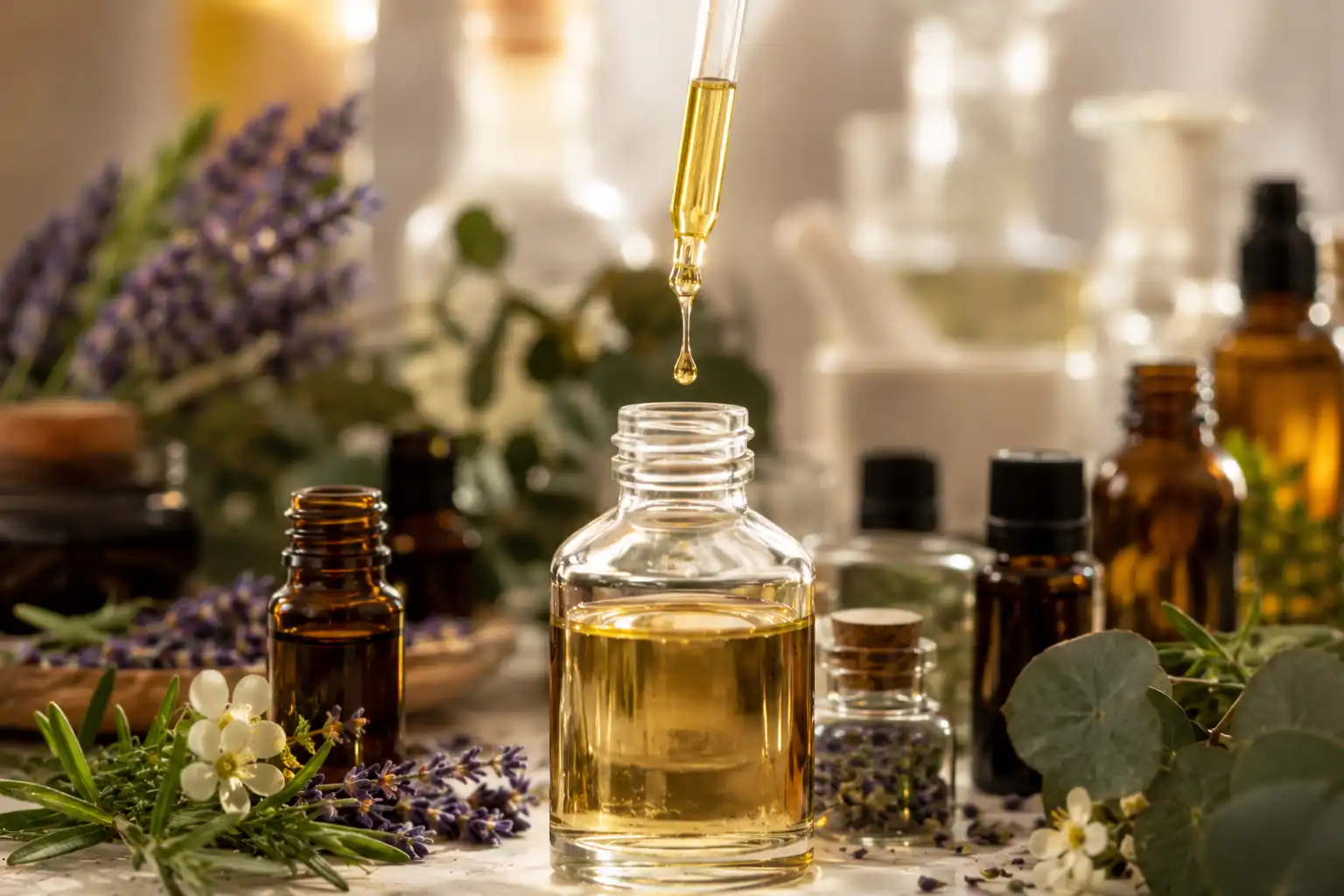
Can You Mix Different Carrier Oils?
Absolutely.
In fact, many experienced formulators prefer blending carrier oils.
Example:
- 50% jojoba
- 30% sweet almond
- 20% rosehip
Benefits include:
- Better texture
- Balanced absorption
- Improved nutrient profile
- Customized feel
This approach allows you to create a carrier oil tailored to your specific needs.
Carrier Oil for Lavender Oil
Lavender essential oil pairs well with nearly every carrier oil.
Top recommendations:
- Jojoba oil
- Sweet almond oil
- Fractionated coconut oil
- Rosehip oil
Uses include:
- Evening massage
- Facial oil (properly diluted)
- Relaxing body oil
- Roller blends
Because lavender is versatile, your choice of carrier oil should primarily depend on your skin type.
Carrier Oil for Eucalyptus Oil
Eucalyptus oil is commonly used in massage blends.
Good carrier oils include:
- Fractionated coconut oil
- Sweet almond oil
- Grapeseed oil
- Jojoba oil
Its fresh, invigorating aroma makes it a popular choice for post-workout massage oils.
Always avoid applying eucalyptus essential oil near the eyes, and use appropriate dilution.
Jojoba Carrier Oil: Why It’s So Popular
Jojoba consistently ranks among the most recommended carrier oils for several reasons.
Advantages
- Long shelf life
- Lightweight
- Minimal scent
- Suitable for face and body
- Excellent for essential oil rollers
- Closely resembles skin’s natural sebum
It also blends beautifully with:
- Lavender
- Frankincense
- Tea tree
- Rosemary
- Peppermint
- Geranium
- Rose
- Sandalwood
If you’re only buying one carrier oil to start your collection, jojoba is an excellent all-around choice.
Sweet Almond Oil as a Carrier Oil
Sweet almond oil has remained a favorite among massage therapists for decades.
Benefits include:
- Smooth glide
- Rich in vitamin E
- Affordable
- Pleasant texture
- Mild aroma
- Excellent for body massage
It pairs especially well with:
- Lavender
- Bergamot
- Cedarwood
- Frankincense
- Ylang-ylang
- Geranium
People with tree nut allergies should consult a healthcare professional before using sweet almond oil on the skin.
Recommended Ingredients and Products
One of the best things about creating your own essential oil blends is that you can customize every ingredient to match your skin’s needs and wellness goals. While the carrier oil forms the foundation of the blend, thoughtfully selected essential oils and supportive botanical ingredients can enhance the overall experience.
Below are some of the most versatile ingredients to consider.
Jojoba Oil
Best for: All skin types
Jojoba oil remains one of the most recommended carrier oils because of its lightweight texture and long shelf life. Since its composition closely resembles the skin’s natural sebum, it absorbs well without leaving an overly greasy feel.
Works well with:
- Lavender
- Frankincense
- Tea Tree
- Rosemary
- Geranium
- Peppermint
Ideal for:
- Facial oils
- Roller bottles
- Everyday moisturizers
- Massage blends
Sweet Almond Oil
Best for: Body massage and dry skin
Sweet almond oil provides excellent glide while delivering vitamin E and nourishing fatty acids.
Excellent for:
- Relaxation massage
- Body oils
- Dry skin care
- Aromatherapy massage
Pairs beautifully with:
- Lavender
- Cedarwood
- Bergamot
- Frankincense
- Ylang Ylang
Rosehip Oil
Best for: Mature-looking skin
Rosehip oil is rich in essential fatty acids and naturally occurring antioxidants.
Many skincare enthusiasts use it in:
- Night serums
- Facial oil blends
- Anti-aging routines
- Dry skin care
Because of its premium price, rosehip oil is often blended with jojoba rather than used alone.
Argan Oil
Known as “liquid gold,” argan oil contains vitamin E and antioxidants that help support soft, healthy-looking skin.
Recommended for:
- Hair oils
- Beard oils
- Facial serums
- Mature skin
Fractionated Coconut Oil
If you’re making massage oils or roller blends, fractionated coconut oil is one of the easiest carrier oils to work with.
Benefits include:
- Always liquid
- Odorless
- Lightweight
- Excellent shelf life
- Doesn’t stain easily
It’s a favorite among massage therapists and DIY aromatherapy enthusiasts.
Vitamin E Oil
Vitamin E is often added in small amounts—not as the primary carrier oil, but as a supportive antioxidant.
Benefits include:
- Helps protect the blend from oxidation
- Supports skin hydration
- May slightly extend the shelf life of some formulations
Only a few drops are typically needed per bottle.
Frankincense Essential Oil
Frankincense has become a staple in premium skincare routines because of its warm, resinous aroma and versatility.
Commonly paired with:
- Jojoba oil
- Rosehip oil
- Argan oil
Popular uses include:
- Facial serums
- Meditation blends
- Massage oils
Lavender Essential Oil
Lavender remains one of the most versatile essential oils available.
Many people include it in:
- Relaxing massage oils
- Evening skincare
- Bedtime roller blends
- Bath oils (properly diluted)
Its gentle floral scent complements nearly every carrier oil.
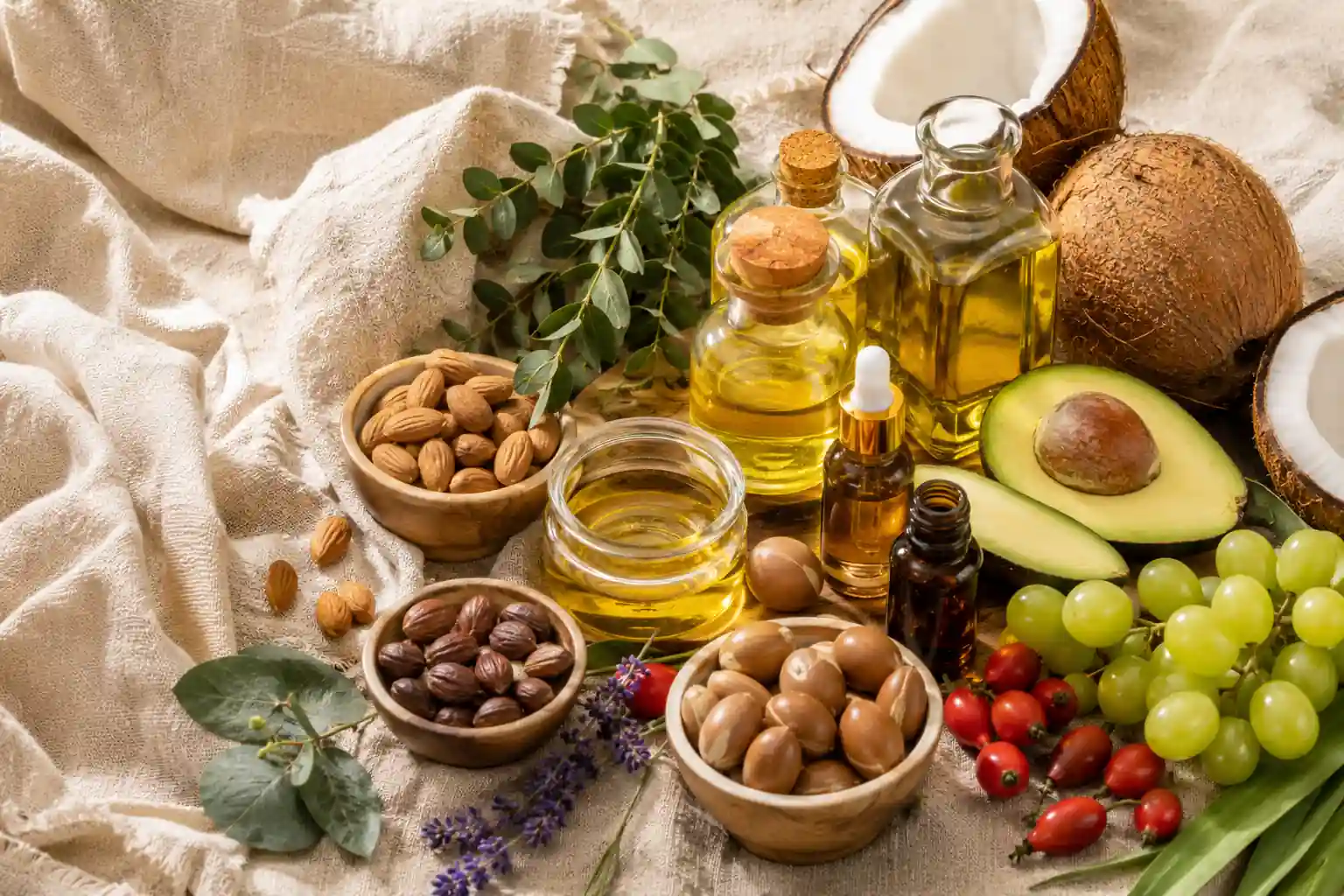
Step-by-Step Guide: How to Make Your Own Carrier Oil Blend
Creating your own blend takes only a few minutes.
Ingredients
- 30 mL (1 oz) carrier oil
- Essential oils of your choice
- Amber glass bottle
- Small funnel (optional)
- Label
Step 1: Choose Your Carrier Oil
Examples:
- Jojoba for facial care
- Sweet almond for massage
- Fractionated coconut for rollers
- Avocado for dry skin
Step 2: Calculate Your Dilution
For a standard adult body blend:
30 mL carrier oil
12 drops total essential oil
This creates approximately a 2% dilution.
Step 3: Add Essential Oils
Add each oil carefully.
Example:
- 6 drops lavender
- 4 drops frankincense
- 2 drops cedarwood
Step 4: Shake
Close the bottle securely.
Shake gently for 20–30 seconds.
Step 5: Label
Always write:
- Ingredients
- Date
- Dilution percentage
This makes it easy to recreate successful blends later.
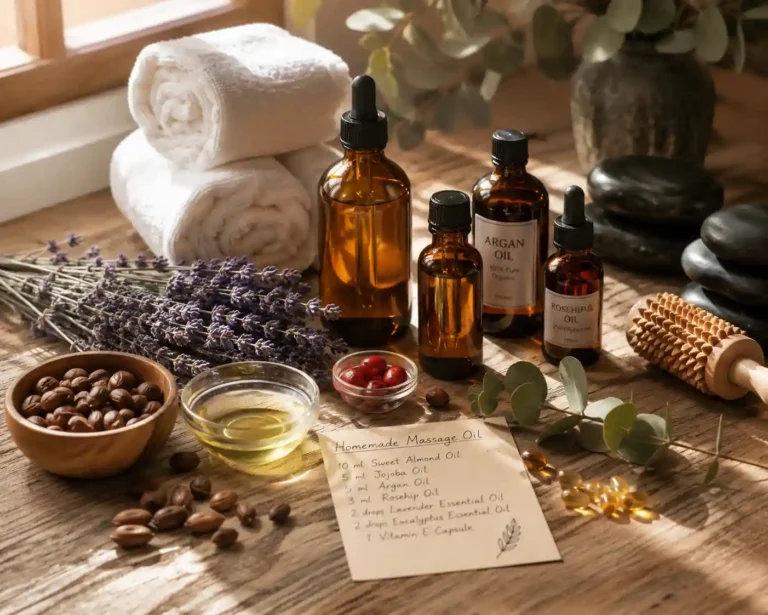
DIY Massage Oil Recipe
A relaxing full-body massage blend.
Ingredients
- 20 mL sweet almond oil
- 10 mL jojoba oil
- 6 drops lavender
- 4 drops cedarwood
- 2 drops frankincense
Shake gently before each use.
Everyday Roller Bottle Recipe
Perfect for daily aromatherapy.
Ingredients
10 mL roller bottle
- Fill with jojoba oil
- 3 drops lavender
- 2 drops frankincense
- 1 drop bergamot (bergapten-free/FCF preferred for daytime topical use)
Roll onto pulse points as desired.
Nourishing Facial Oil Blend
Suitable for many normal-to-dry skin types.
Ingredients
- 20 mL jojoba oil
- 8 mL rosehip oil
- 2 mL argan oil
Essential oils (1% dilution)
- 3 drops lavender
- 3 drops frankincense
Apply a few drops to slightly damp skin after cleansing.
Deep Moisture Body Oil
Excellent during colder months.
Ingredients
- 15 mL avocado oil
- 15 mL sweet almond oil
Essential oils
- 8 drops lavender
- 4 drops geranium
Massage into damp skin after bathing.
Best Carrier Oils for Popular Essential Oils
| Essential Oil | Recommended Carrier Oils |
|---|---|
| Lavender | Jojoba, Sweet Almond, Rosehip |
| Frankincense | Jojoba, Argan, Rosehip |
| Tea Tree | Jojoba, Grapeseed |
| Eucalyptus | Fractionated Coconut, Sweet Almond |
| Peppermint | Jojoba, Fractionated Coconut |
| Rosemary | Grapeseed, Jojoba |
| Lemon | Jojoba, Sweet Almond |
| Geranium | Argan, Jojoba |
How Long Do Carrier Oils Last?
Shelf life varies depending on the oil.
| Carrier Oil | Approximate Shelf Life |
|---|---|
| Jojoba | 3–5 years |
| Fractionated Coconut | 2–5 years |
| Sweet Almond | 1–2 years |
| Olive Oil | 1–2 years |
| Argan Oil | 1–2 years |
| Avocado Oil | Around 1 year |
| Rosehip Oil | 6–12 months |
| Grapeseed Oil | 6–12 months |
Always discard oils that develop an unpleasant or rancid odor.
How to Store Carrier Oils
Proper storage helps preserve freshness and quality.
Store oils:
- In dark glass bottles
- Away from direct sunlight
- In a cool, dry place
- With lids tightly closed
- Away from excessive heat and humidity
Refrigeration may extend the shelf life of more delicate oils like rosehip or grapeseed, though some oils may become cloudy when chilled.
Common Mistakes to Avoid
Even experienced DIY enthusiasts occasionally make blending mistakes. Avoiding these common issues can improve both safety and results.
1- Using Undiluted Essential Oils
Essential oils are highly concentrated and should almost always be diluted before topical application.
2- Ignoring Patch Tests
Always test a small amount of a new blend on the inside of your forearm and wait 24 hours before broader use.
3- Using Too Many Essential Oils
More isn’t necessarily better.
Blends with two to four essential oils are often balanced, pleasant, and easier to recreate.
4- Forgetting Labels
Without labels, it’s easy to lose track of ingredients, dilution levels, or preparation dates.
5- Using Expired Oils
Carrier oils naturally oxidize over time. Rancid oils may smell sour or stale and should be replaced.
6- Poor Storage Practices
Heat, air, and sunlight accelerate oxidation. Dark bottles and cool storage help maintain quality.
Safety Tips
While carrier oils make essential oils safer to use, they don’t eliminate all risks.
Keep these best practices in mind:
- Always dilute essential oils before applying them to the skin.
- Perform a patch test before using a new blend.
- Avoid contact with the eyes, inside the nose, and other sensitive areas.
- Some essential oils, especially certain citrus oils, can increase sensitivity to sunlight. Follow product-specific guidance before sun exposure.
- If you are pregnant, nursing, have a chronic medical condition, or are blending oils for children, consult an appropriate healthcare professional before use.
- Keep essential oils and carrier oils out of reach of children and pets.
Frequently Asked Questions
1. What is a carrier oil, and why is it important?
A carrier oil is a plant-based oil used to dilute essential oils before they’re applied to the skin. Because essential oils are highly concentrated, carrier oils help reduce the risk of irritation while improving spreadability and adding moisturizing nutrients. They also enhance massage blends, facial serums, and roller bottle recipes by creating a smoother, more balanced application.
2. How much carrier oil should I use with essential oils?
For most adults, a 1–2% dilution is suitable for daily topical use. A 2% dilution equals approximately 12 drops of essential oil per 1 ounce (30 mL) of carrier oil. Facial products often benefit from a gentler 1% dilution, while short-term massage blends may use up to 3% when appropriate.
3. Can I apply essential oils directly to my skin?
In most cases, it’s best to dilute essential oils with a carrier oil before applying them to the skin. Undiluted essential oils may increase the risk of irritation or sensitization, especially on sensitive areas or with repeated use. Always follow the specific safety guidance for each essential oil.
4. Is coconut oil a good carrier oil?
Yes. Both virgin and fractionated coconut oil can be used as carrier oils. Virgin coconut oil offers deep hydration but is solid at cooler temperatures, while fractionated coconut oil remains liquid, absorbs quickly, and is widely used for massage oils and roller bottle blends.
5. Is olive oil a carrier oil?
Yes. Olive oil can be used as a carrier oil, particularly for body massage and dry skin. It’s rich in antioxidants and vitamin E, though its heavier texture and stronger aroma may make it less suitable for lightweight facial blends.
6. Which carrier oil is best for sensitive skin?
Jojoba oil, apricot kernel oil, and fractionated coconut oil are among the gentlest options for many people with sensitive skin. Regardless of the oil you choose, always perform a patch test before using a new blend more broadly.
7. Can I mix different carrier oils together?
Absolutely. Combining carrier oils lets you customize texture, absorption, and skincare benefits. For example, blending jojoba with rosehip creates a lightweight yet nourishing facial oil, while sweet almond and fractionated coconut make an excellent massage base.
8. Which carrier oil is best for lavender essential oil?
Lavender essential oil blends well with jojoba, sweet almond, rosehip, grapeseed, and fractionated coconut oil. Your choice should depend on your intended use—jojoba works well for facial care, while sweet almond and fractionated coconut are excellent for body massage.
9. How long do carrier oils last?
Shelf life varies by oil. Jojoba and fractionated coconut oil can last several years when stored properly, while more delicate oils such as rosehip and grapeseed are typically best used within 6–12 months. Always store oils in tightly sealed dark glass bottles away from heat and sunlight.
10. Can I use cooking oils as carrier oils?
Some kitchen oils, including extra virgin olive oil and coconut oil, can serve as carrier oils if they’re high quality and suitable for topical use. However, many DIY formulators prefer cosmetic-grade carrier oils because of their lighter texture, consistency, and longer shelf life.
11. What is the best carrier oil for massage?
Sweet almond oil, jojoba oil, and fractionated coconut oil are among the most popular choices. They provide excellent glide, absorb comfortably into the skin, and blend well with a wide variety of essential oils, making them ideal for relaxing or therapeutic massage.
12. Can I use carrier oils every day?
Yes. Most carrier oils are gentle enough for daily use and can be applied on their own or as part of a properly diluted essential oil blend. Selecting a carrier oil that matches your skin type helps support hydration and maintain a healthy skin barrier.
Conclusion
A high-quality carrier oil for essential oils is much more than a simple diluting ingredient—it’s the foundation of safe, effective, and enjoyable aromatherapy. Whether you’re creating a calming massage oil, a nourishing facial serum, or a convenient roller bottle, the right carrier oil enhances comfort, improves application, and delivers valuable skincare benefits of its own.
Jojoba oil remains one of the most versatile options for nearly every skin type, while sweet almond oil excels in massage blends, fractionated coconut oil is ideal for roller bottles, and richer oils like avocado and argan provide deep nourishment for dry or mature skin.
Remember that successful blending isn’t about using more essential oil—it’s about choosing the right carrier, following proper dilution guidelines, and creating formulations that suit your individual needs. Start with simple recipes, patch test new blends, and enjoy experimenting with combinations that help you build a personalized natural wellness routine.
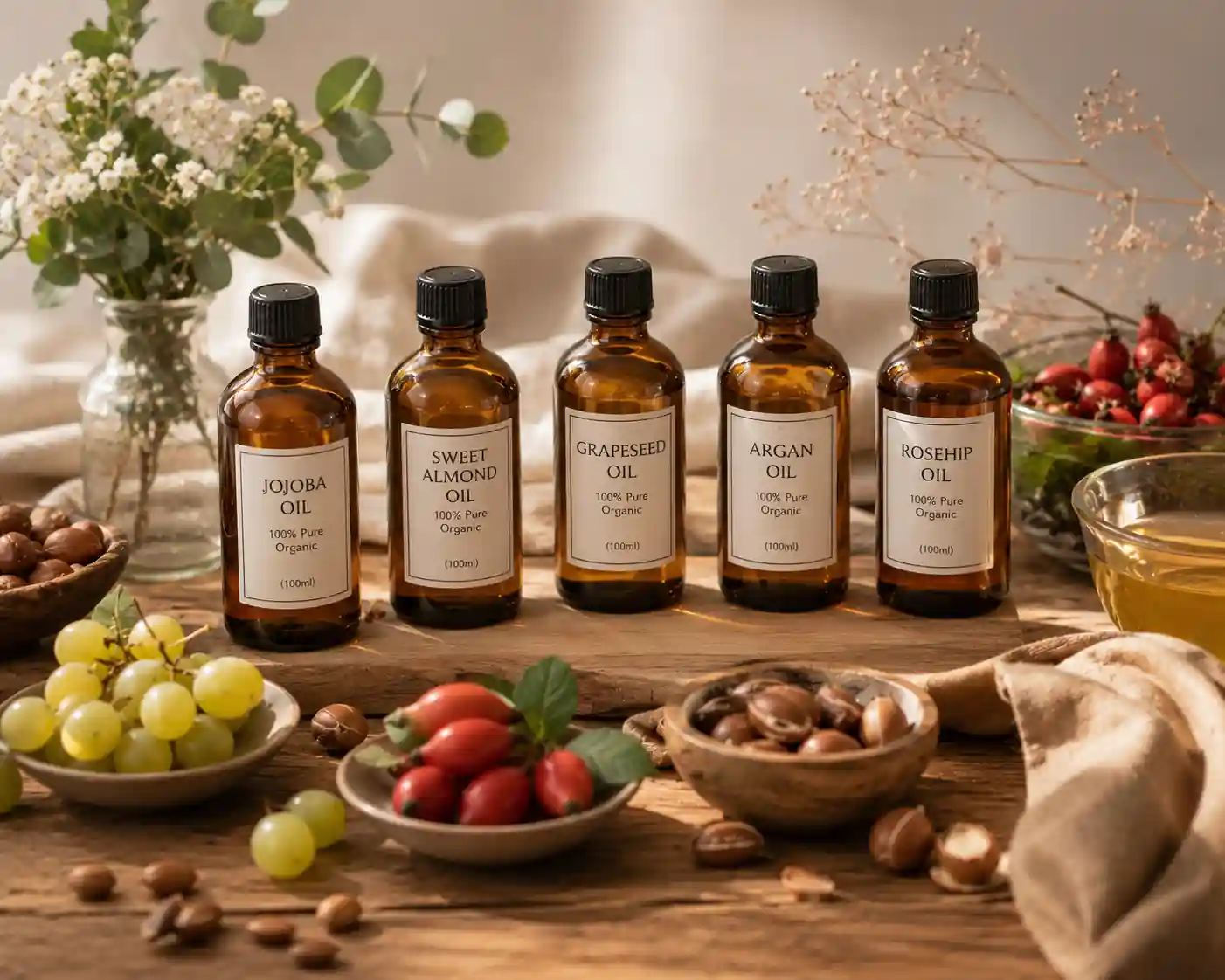
🌿 Discover More: Unlock the Art of Essential Oil Blending
Now that you know how to safely dilute and blend essential oils with carrier oils, why stop there?
The next step is learning which essential oils naturally complement one another. Understanding aroma families, scent notes, and therapeutic pairings can help you create blends that are more balanced, enjoyable, and purposeful—whether you’re making massage oils, diffuser recipes, roller blends, or DIY skincare.
👉 Don’t Miss This Guide:
What Essential Oils Blend Well Together? Complete Pairing Guide
Inside, you’ll discover:
- Beginner-friendly essential oil pairing charts
- Floral, citrus, woody, herbal, and spicy combinations
- Seasonal aromatherapy blend ideas
- Recipes for relaxation, focus, sleep, and energy
- Tips for creating balanced fragrance profiles
- Common blending mistakes to avoid
It’s the perfect companion to this guide and will help you blend with greater confidence and creativity.
Explore More at H2O Blends
If you enjoy making your own essential oil recipes, take a few minutes to browse the growing collection of educational resources on H2O Blends. You’ll find expert guides on carrier oils, essential oil recipes, diffuser blends, massage oils, natural skincare, and aromatherapy tips—all designed to help you make informed, safe, and enjoyable choices with every blend.
Whether you’re just beginning your aromatherapy journey or refining your DIY formulations, there’s always another inspiring idea waiting to be discovered.