Homemade Oil Massage: The Complete DIY Guide to Making Massage Oil at Home Naturally
There’s something incredibly comforting about a warm oil massage after a long day. Whether you’re dealing with tired muscles, dry skin, everyday stress, or simply craving a relaxing self-care ritual, the right homemade massage oil can transform a few quiet minutes into a spa-like experience.
Many store-bought massage oils contain synthetic fragrances, mineral oils, preservatives, or unnecessary additives that may not suit every skin type. Creating your own homemade oil massage blend allows you to control every ingredient, customize the scent, and tailor the formula to your skin and wellness goals.
The good news? You don’t need to be an aromatherapist to make a luxurious DIY massage oil. With a few high-quality carrier oils and carefully selected essential oils, you can create nourishing blends for relaxation, sore muscles, romance, stress relief, or everyday moisturizing—all from the comfort of your home.
This guide explains how to make massage oil, the best ingredients to use, the science behind massage oils, safety tips, and easy recipes anyone can make.
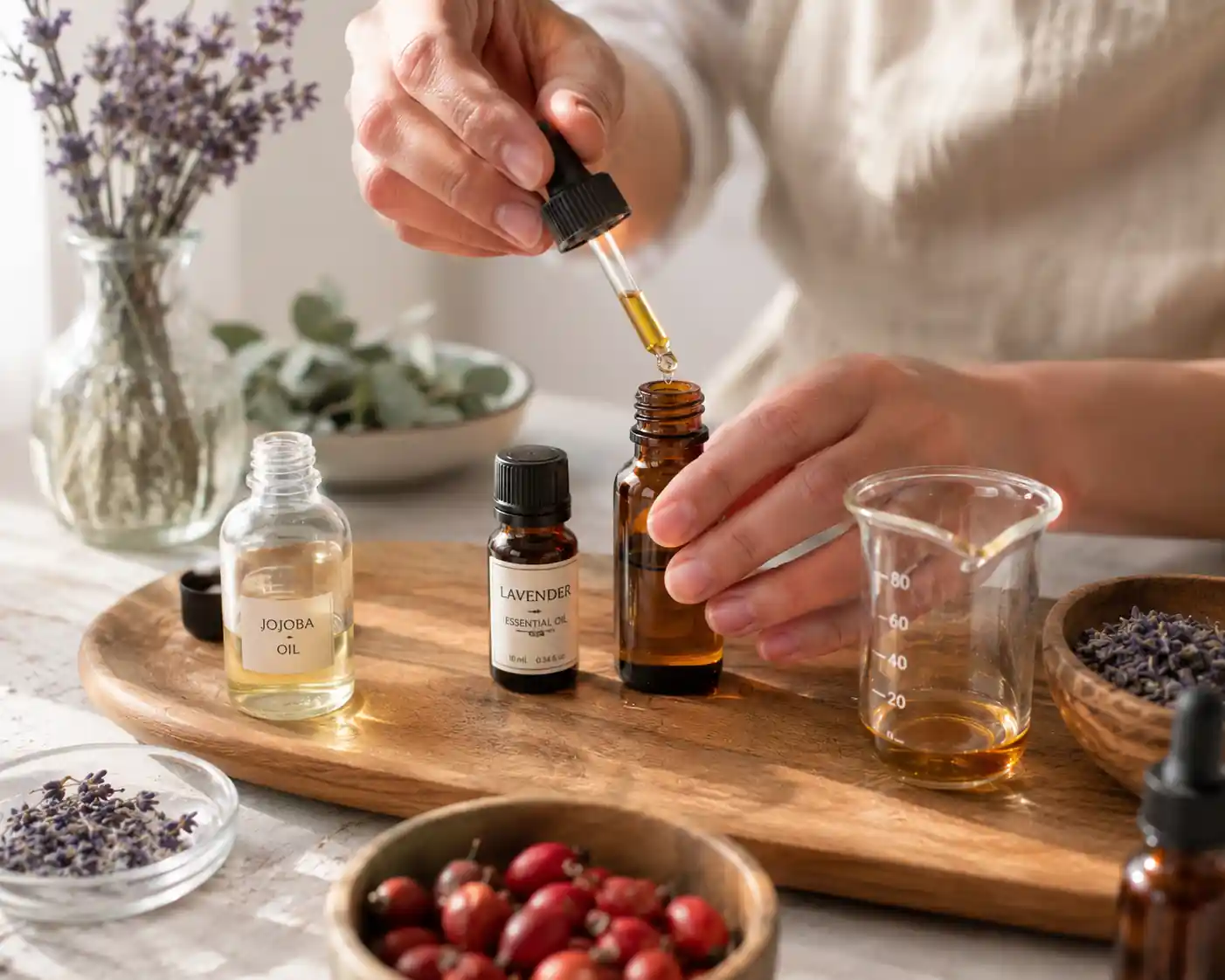
A homemade oil massage blend is created by combining a nourishing carrier oil—such as jojoba, sweet almond, grapeseed, or fractionated coconut oil—with diluted essential oils chosen for your desired purpose. Properly diluted massage oils help reduce friction during massage, moisturize the skin, and provide aromatherapy benefits that may promote relaxation, comfort, and overall well-being when used safely.
Key Takeaways
- Homemade massage oils let you control every ingredient.
- Always dilute essential oils in a carrier oil before applying to the skin.
- Jojoba, sweet almond, grapeseed, and argan oil are excellent massage bases.
- Lavender, frankincense, peppermint, eucalyptus, and chamomile are among the most popular essential oils for massage recipes.
- Store homemade massage oils in dark glass bottles away from heat and sunlight.
- Perform a patch test before using any new oil blend.
- Proper dilution makes massage oils both safer and more effective.
What Is Homemade Oil Massage?
Homemade oil massage refers to using a personalized blend of carrier oils and essential oils to lubricate the skin during massage while supporting relaxation, skin hydration, and aromatherapy.
Unlike commercial massage oils that often contain artificial fragrances or fillers, homemade blends allow you to:
- Choose natural ingredients
- Customize scents
- Adjust the formula for your skin type
- Avoid unnecessary chemicals
- Create targeted blends for different wellness goals
The practice combines two powerful forms of self-care:
- The physical benefits of massage
- The aromatic effects of essential oils
Together, they create an enjoyable experience that supports both body and mind.
Why More People Are Making DIY Massage Oil
Natural wellness continues to grow because many people prefer knowing exactly what they’re putting on their skin.
Creating your own DIY massage oil offers several advantages:
1- Better Ingredient Quality
You choose premium carrier oils and pure essential oils instead of relying on unknown ingredients.
2- Personalized Aromatherapy
Everyone responds differently to scents.
You can create blends that feel:
- Relaxing
- Uplifting
- Romantic
- Refreshing
- Grounding
3- Cost Effective
Buying individual oils may seem expensive initially, but one bottle often makes dozens of massage blends.
4- Suitable for Different Skin Types
You can tailor recipes for:
- Dry skin
- Sensitive skin
- Mature skin
- Normal skin
- Oily skin
The Science Behind Massage Oils
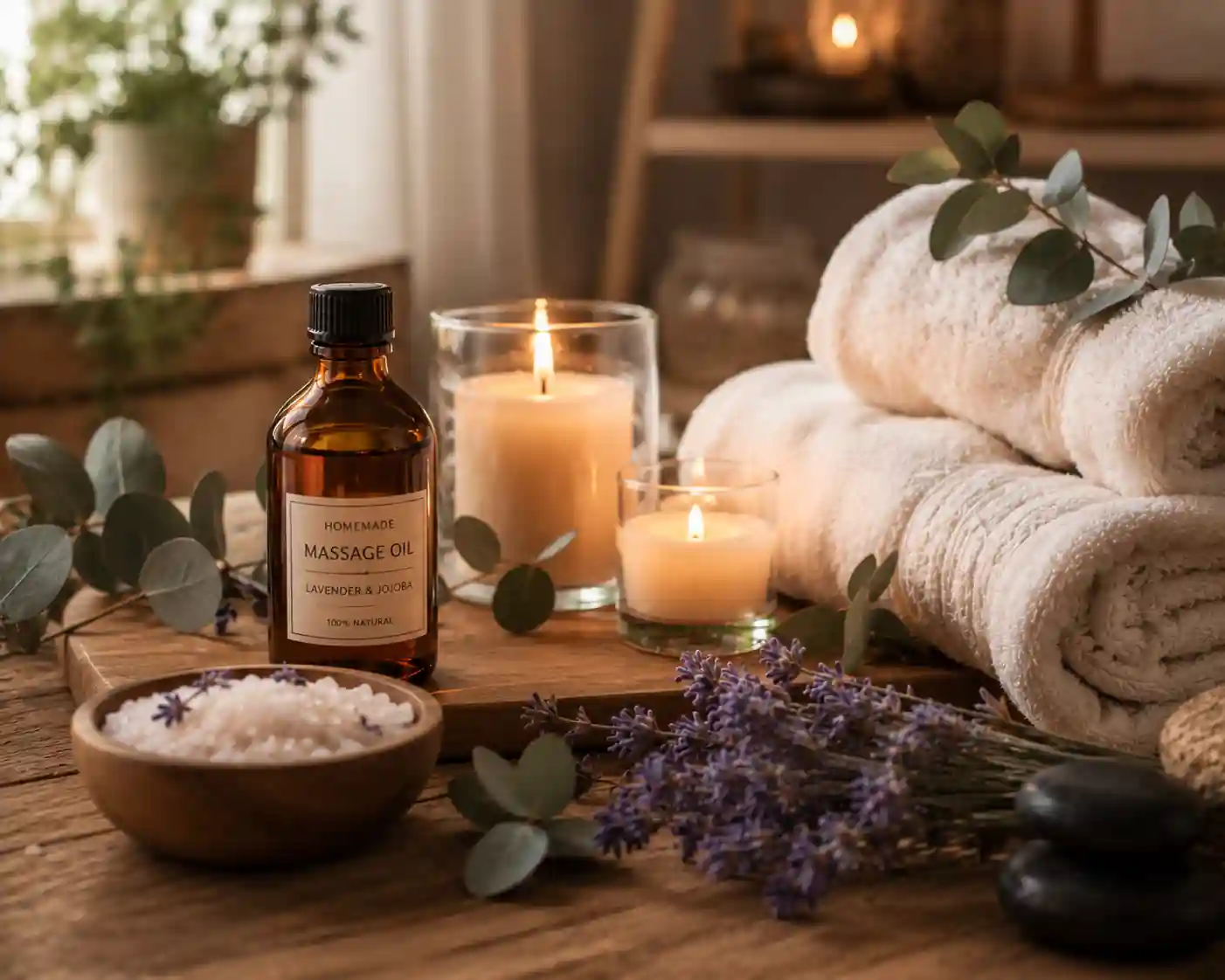
Massage itself has been widely studied for its potential to reduce stress, improve circulation, ease temporary muscle discomfort, and promote relaxation.
Massage oils mainly work by:
- Reducing friction between hands and skin
- Helping hands glide smoothly
- Preventing skin irritation
- Locking moisture into the skin
- Supporting the skin barrier
Essential oils contribute mainly through aromatherapy and their naturally occurring plant compounds.
Research suggests that certain aromas—particularly lavender—may help promote relaxation and improve mood for some individuals. However, essential oils should not be viewed as cures or medical treatments.
The greatest benefit often comes from combining:
- Gentle massage
- Comfortable surroundings
- Deep breathing
- Pleasant aromas
Understanding Carrier Oils
Carrier oils make up about 98–99% of a massage oil recipe.
They dilute essential oils while nourishing the skin.
Without carrier oils, essential oils can be too concentrated for direct application.
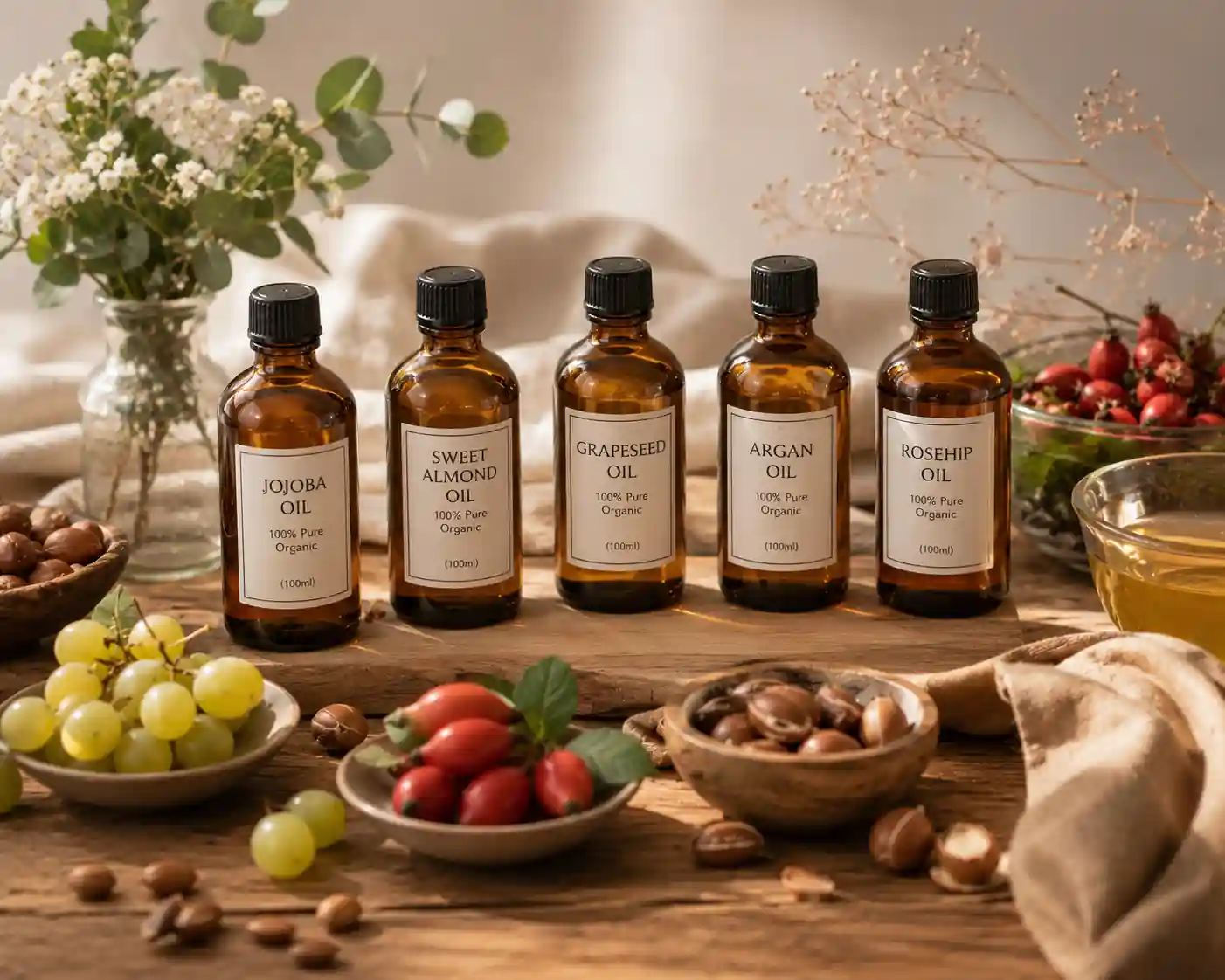
1- Jojoba Oil
One of the most versatile massage oils available.
Benefits include:
- Lightweight texture
- Closely resembles natural skin oils
- Suitable for most skin types
- Long shelf life
- Non-greasy finish
Best for:
- Sensitive skin
- Combination skin
- Everyday massage
2- Sweet Almond Oil
A favorite among massage therapists.
Benefits:
- Excellent glide
- Rich in Vitamin E
- Softens skin
- Affordable
- Mild scent
Best for:
- Full-body massage
- Dry skin
- Beginners
3- Grapeseed Oil
This lightweight oil absorbs quickly without feeling heavy.
Advantages:
- Thin consistency
- Rich in antioxidants
- Leaves minimal residue
- Good for oily skin
Best for:
- Summer massage
- Professional massage
- Sports massage
4- Fractionated Coconut Oil
Unlike regular coconut oil, fractionated coconut oil remains liquid at room temperature.
Benefits include:
- Long shelf life
- Odorless
- Smooth glide
- Doesn’t stain sheets easily
Perfect for:
- Couples massage
- Everyday use
- DIY recipes
5- Argan Oil
Often called “liquid gold,” argan oil is highly valued for skin care.
Benefits:
- Rich in Vitamin E
- Contains essential fatty acids
- Supports soft, smooth skin
- Luxurious texture
Ideal for:
- Mature skin
- Dry skin
- Spa-quality massage
6- Rosehip Oil
Rosehip oil is prized for its nourishing properties.
It contains:
- Vitamin A precursors
- Essential fatty acids
- Antioxidants
Many people add a small amount of rosehip oil to massage blends designed for facial massage or dry skin rather than using it as the primary carrier oil.
Choosing Essential Oils for Massage Recipes
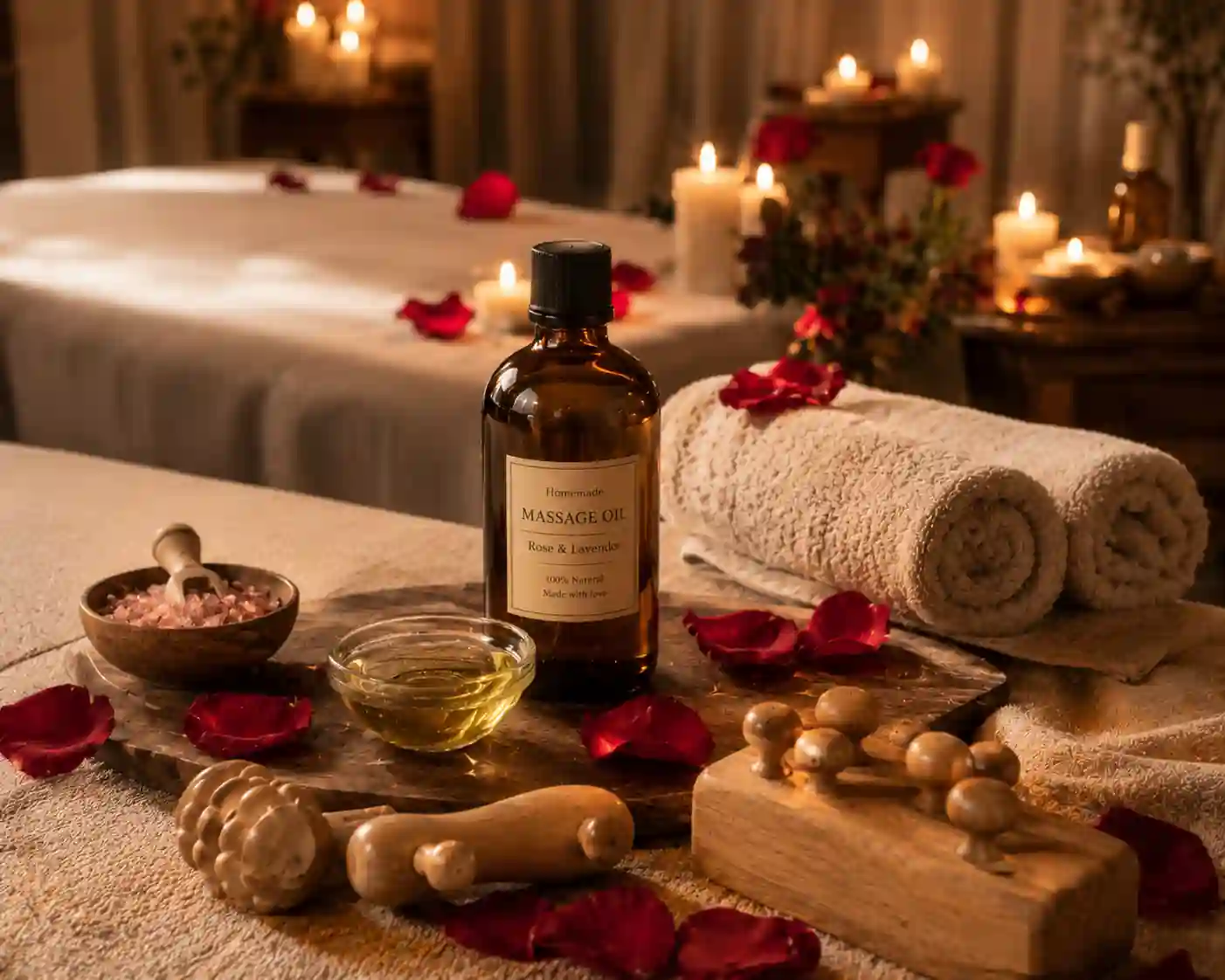
Essential oils provide aroma and may enhance the overall massage experience when properly diluted.
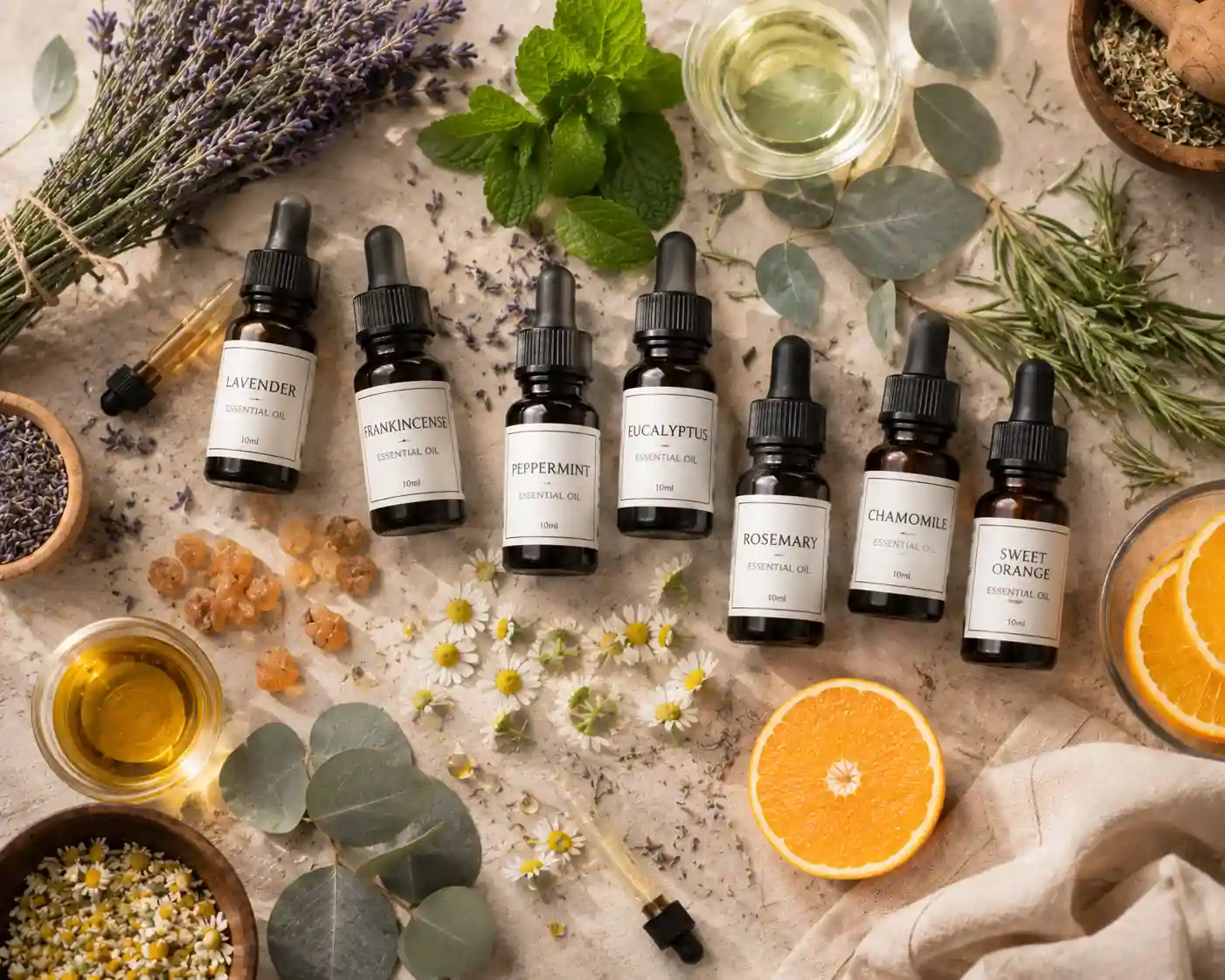
Below are some of the most popular essential oils for massage recipes.
1- Lavender Essential Oil
Lavender remains one of the most versatile massage oils.
Why people love it:
- Floral aroma
- Promotes relaxation
- Excellent evening massage oil
- Suitable for many skin types
Great for:
- Stress relief
- Bedtime massage
- Self-care rituals
2- Frankincense Essential Oil
Frankincense has been treasured for centuries.
Benefits include:
- Warm earthy aroma
- Complements many oil blends
- Often used in meditation
- Luxurious scent profile
Pairs well with:
- Lavender
- Cedarwood
- Orange
- Bergamot
3- Peppermint Essential Oil
Peppermint creates an invigorating cooling sensation.
Best for:
- Post-workout massage
- Tired legs
- Refreshing massage blends
Because peppermint is potent, use it sparingly and avoid applying near the eyes or on sensitive skin.
4- Eucalyptus Essential Oil
Known for its fresh, clean scent.
Popular in massage blends designed for:
- Relaxation
- Exercise recovery
- Spa-style experiences
It blends beautifully with lavender and peppermint.
5- Sweet Orange Essential Oil
Sweet orange adds a cheerful citrus aroma.
Benefits:
- Bright scent
- Uplifting atmosphere
- Great for daytime massage
It pairs well with:
- Frankincense
- Lavender
- Bergamot
- Cedarwood
6- Chamomile Essential Oil
Chamomile has a gentle herbal aroma that many people associate with calmness.
Best for:
- Evening massage
- Sensitive skin blends
- Relaxing aromatherapy
7- Rosemary Essential Oil
Rosemary offers an energizing herbal scent.
Many massage blends use rosemary alongside peppermint or eucalyptus for active lifestyles.
Essential Oil Dilution Guidelines
One of the most important parts of learning how to make massage oil is proper dilution.
For most healthy adults:
| Purpose | Recommended Dilution |
|---|---|
| Daily body massage | 1–2% |
| Relaxation massage | 2% |
| Spot massage | Up to 3% (if appropriate) |
| Sensitive skin | 0.5–1% |
As a general guide:
- 1 tablespoon (15 ml) carrier oil = about 3–6 drops essential oil
- 30 ml bottle = approximately 12 drops for a 2% dilution
- 60 ml bottle = approximately 24 drops
- 100 ml bottle = approximately 40 drops
Using more essential oil does not necessarily make a blend more effective and may increase the risk of skin irritation.
Benefits of Homemade Oil Massage
A well-formulated homemade massage oil can provide several benefits when used as part of a healthy self-care routine.
A- Physical Benefits
- Smooth massage glide
- Softer skin
- Improved skin hydration
- Reduced friction
- More comfortable massage experience
B- Emotional Benefits
- Encourages relaxation
- Creates a calming atmosphere
- Supports mindfulness
- Helps establish a consistent self-care routine
- Enhances the massage experience through aromatherapy
C- Skin Benefits
Carrier oils contain naturally occurring nutrients such as fatty acids and vitamin E that help support the skin’s protective barrier and leave it feeling soft and nourished.
How to Make Massage Oil at Home
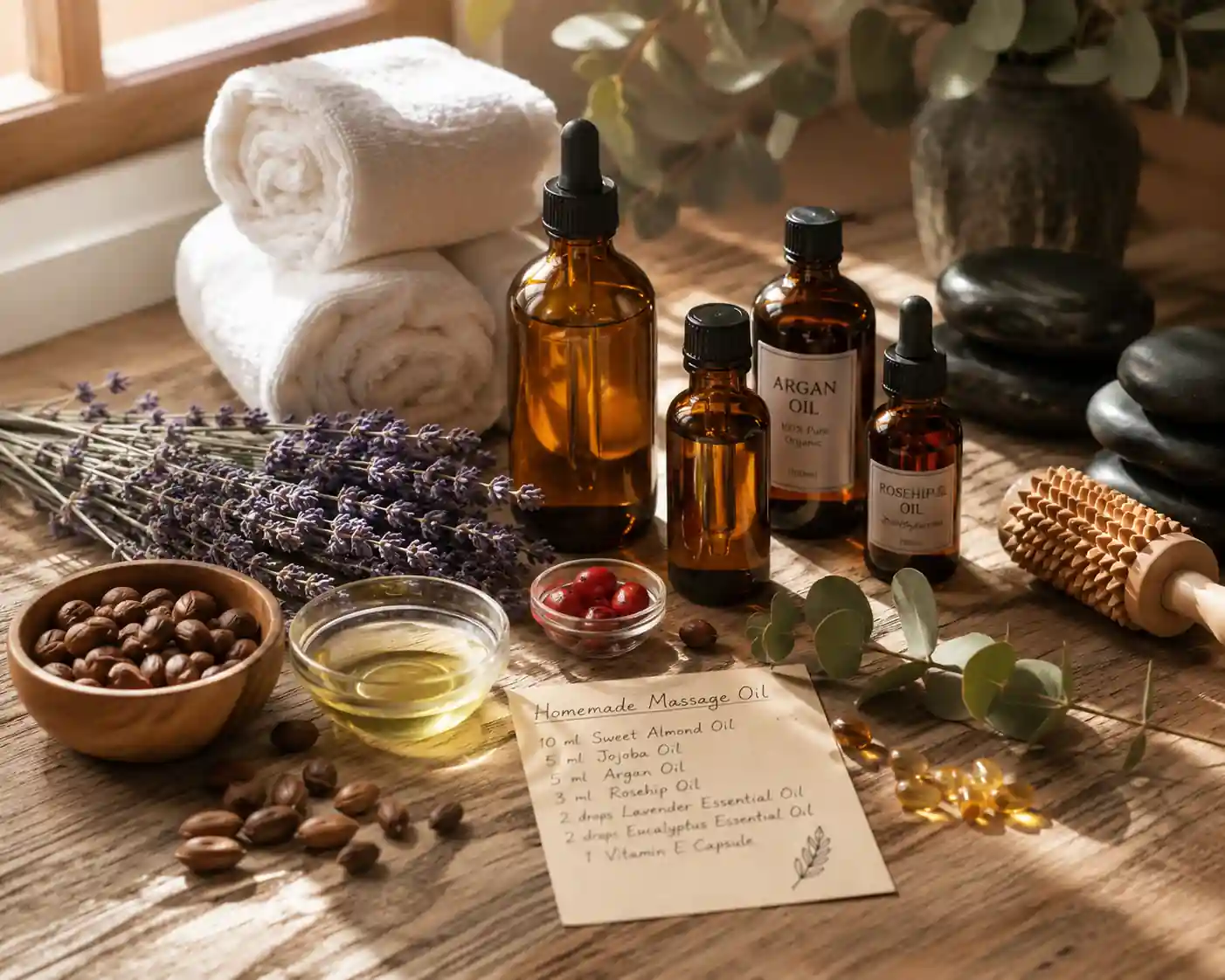
Learning how to make massage oil is surprisingly simple. Once you understand the basics of carrier oils, essential oils, and proper dilution, you can create endless custom blends for relaxation, skin nourishment, or post-workout recovery.
What You’ll Need
- A dark glass bottle (30–100 ml)
- Measuring spoons or a small graduated beaker
- A small funnel (optional but helpful)
- Your chosen carrier oil
- Essential oils
- A label with the recipe name and date
Step-by-Step Guide
Step 1: Choose Your Carrier Oil
Select a carrier oil based on your skin type and massage goal.
For example:
- Jojoba for balanced skin
- Sweet almond for full-body massage
- Grapeseed for a lightweight feel
- Argan for dry or mature skin
- Fractionated coconut oil for long-lasting glide
Step 2: Add Essential Oils
Follow a safe dilution ratio. For a standard 60 ml (2 oz) bottle, about 24 drops of essential oil creates a 2% dilution suitable for most adults.
Step 3: Shake Well
Secure the cap and gently shake the bottle for 30–60 seconds to distribute the oils evenly.
Step 4: Let the Blend Rest
Allow the mixture to sit for 12–24 hours before using it. This gives the aromas time to blend into a more balanced fragrance.
Step 5: Perform a Patch Test
Apply a small amount to the inside of your forearm and wait 24 hours. If irritation occurs, discontinue use.
10 Homemade Massage Oil Recipes
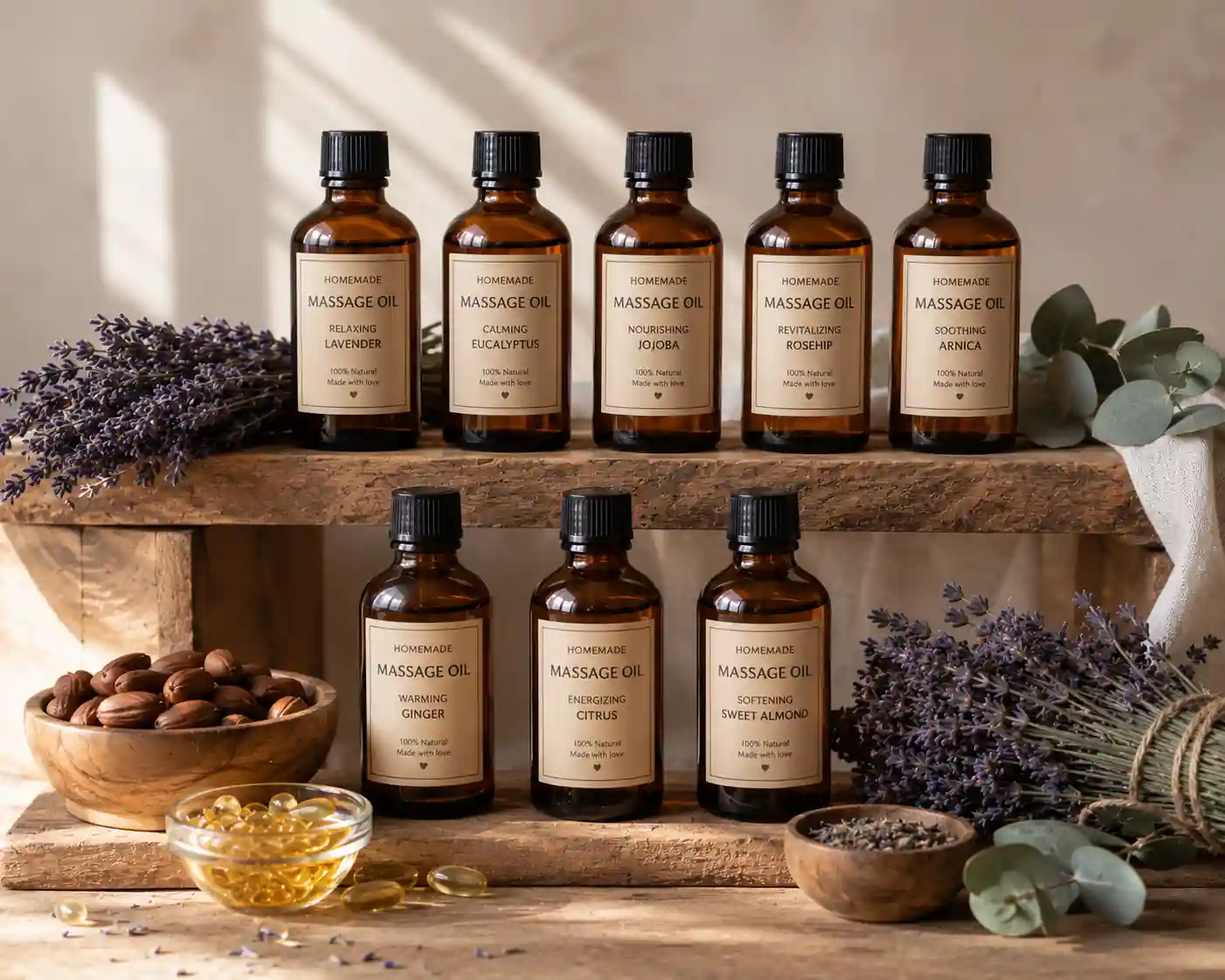
These essential oil massage oil recipes are easy to make and can be customized to your preferences.
1. Relaxing Lavender Massage Oil
Ingredients
- 60 ml jojoba oil
- 12 drops lavender essential oil
- 6 drops frankincense essential oil
- 6 drops sweet orange essential oil
Best For
- Evening massage
- Relaxation
- Stressful days
2. Muscle Comfort Massage Oil
Ingredients
- 60 ml sweet almond oil
- 8 drops peppermint
- 8 drops eucalyptus
- 8 drops rosemary
Ideal after physical activity or a long day of standing.
3. Romantic Couples Massage Oil
Ingredients
- 60 ml fractionated coconut oil
- 10 drops ylang-ylang
- 8 drops sweet orange
- 6 drops sandalwood
Creates a warm, luxurious aroma perfect for a relaxing couples’ massage.
4. Nourishing Dry Skin Massage Oil
Ingredients
- 40 ml jojoba oil
- 15 ml argan oil
- 5 ml rosehip oil
- 10 drops lavender
- 6 drops frankincense
- 2 vitamin E capsules
Leaves skin feeling soft and moisturized.
5. Morning Energy Massage Blend
Ingredients
- 60 ml grapeseed oil
- 10 drops grapefruit
- 8 drops rosemary
- 6 drops peppermint
Perfect for a refreshing morning self-care routine.
6. Calming Evening Blend
Ingredients
- 60 ml sweet almond oil
- 12 drops lavender
- 8 drops chamomile
- 4 drops cedarwood
Designed to encourage a peaceful nighttime routine.
7. Spa-Inspired Massage Oil
Ingredients
- 50 ml jojoba oil
- 10 ml argan oil
- 10 drops lavender
- 8 drops frankincense
- 6 drops bergamot
A luxurious blend with a sophisticated aroma.
8. Citrus Fresh Massage Oil
Ingredients
- 60 ml grapeseed oil
- 12 drops sweet orange
- 6 drops lemon
- 6 drops bergamot
Bright, cheerful, and uplifting.
9. Self-Care Weekend Blend
Ingredients
- 60 ml jojoba oil
- 8 drops lavender
- 8 drops frankincense
- 8 drops cedarwood
Perfect for slow weekends and mindfulness sessions.
10. Everyday Massage Oil
Ingredients
- 60 ml sweet almond oil
- 10 drops lavender
- 8 drops sweet orange
- 6 drops frankincense
A versatile recipe suitable for regular home massage.
Best Carrier Oils Comparison
| Carrier Oil | Texture | Skin Type | Shelf Life | Best Use |
|---|---|---|---|---|
| Jojoba | Light | All skin types | Excellent | Daily massage |
| Sweet Almond | Medium | Dry, normal | Good | Full-body massage |
| Grapeseed | Very light | Oily skin | Moderate | Sports massage |
| Argan | Rich | Mature, dry | Good | Luxury massage |
| Rosehip | Light | Dry, mature | Moderate | Facial massage |
| Fractionated Coconut | Silky | Most skin types | Excellent | Couples massage |
Popular Essential Oils Comparison
| Essential Oil | Aroma | Best For | Blends Well With |
|---|---|---|---|
| Lavender | Floral | Relaxation | Frankincense, orange |
| Frankincense | Warm, resinous | Meditation, calming | Lavender, cedarwood |
| Peppermint | Fresh | Cooling massage | Rosemary, eucalyptus |
| Rosemary | Herbal | Invigorating blends | Peppermint |
| Sweet Orange | Citrus | Uplifting | Lavender, frankincense |
| Chamomile | Soft herbal | Evening massage | Lavender |
| Bergamot | Fresh citrus | Mood-boosting | Lavender |
Recommended Ingredients and Products
Choosing high-quality ingredients can significantly improve the feel, aroma, and shelf life of your homemade massage oils.
1- Jojoba Oil
A favorite for nearly every skin type thanks to its lightweight texture and long shelf life.
2- Argan Oil
Rich in vitamin E and essential fatty acids, making it an excellent addition for dry or mature skin.
3- Rosehip Oil
Often added in smaller amounts to enhance skin nourishment, especially in facial massage blends.
4- Vitamin E
Vitamin E oil helps support skin health and may slow oxidation in oil blends, extending freshness.
5- Lavender Essential Oil
One of the most versatile choices for relaxation and evening massage.
6- Frankincense Essential Oil
Adds a warm, grounding aroma that complements many DIY massage oil recipes.
Storage Tips of massage oil
Proper storage keeps your massage oil fresh and effective.
Store your oils:
- In dark amber or cobalt glass bottles
- Away from direct sunlight
- In a cool, dry place
- With the lid tightly sealed
Avoid:
- Plastic containers
- Humid bathrooms
- Heat sources
- Windowsills
How Long Does Homemade Massage Oil Last?
Shelf life depends mainly on the carrier oil.
Typical estimates:
- Jojoba oil: up to 2 years
- Fractionated coconut oil: 2 years
- Sweet almond oil: about 1 year
- Grapeseed oil: 6–12 months
- Rosehip oil: 6–9 months
If your massage oil develops a sour or rancid smell, changes color significantly, or thickens unexpectedly, it’s best to discard it.
Common Mistakes to Avoid when using massage oil
A- Using Too Much Essential Oil
More isn’t better. Over-concentrated blends increase the risk of skin irritation.
B- Skipping the Patch Test
Even natural ingredients can trigger allergic reactions in some people.
C- Using Low-Quality Oils
Pure, fresh oils generally provide a better aroma and a more pleasant massage experience than products with synthetic fragrances or unnecessary fillers.
D- Ignoring Expiration Dates
Natural oils eventually oxidize. Fresh ingredients help maintain quality.
5- Poor Storage
Exposure to heat, air, and sunlight speeds up oxidation and reduces shelf life.
Safety Tips
Although homemade massage oils are generally easy to use, keep these precautions in mind:
- Never apply undiluted essential oils directly to the skin.
- Avoid contact with the eyes and mucous membranes.
- Keep oils out of reach of children and pets.
- If you’re pregnant, breastfeeding, or have a medical condition, consult a qualified healthcare professional before using essential oils.
- Some citrus oils may increase sensitivity to sunlight; follow product guidance if using them before sun exposure.
- Discontinue use if irritation occurs.
What is homemade oil massage?
Homemade oil massage uses a custom blend of carrier oils and diluted essential oils to improve massage glide, moisturize the skin, and enhance relaxation through aromatherapy. It allows complete control over ingredients and customization for different skin types and wellness goals.
How do you make massage oil?
Mix a nourishing carrier oil such as jojoba or sweet almond oil with properly diluted essential oils. Store the blend in a dark glass bottle, shake well, allow it to rest for a day, and perform a patch test before regular use.
Can you make DIY massage oil without essential oils?
Yes. A blend made solely from carrier oils can provide excellent glide and skin hydration. Essential oils are optional and primarily add fragrance and aromatherapy benefits.
Does homemade massage oil expire?
Yes. The shelf life depends on the carrier oil used. Most homemade massage oils remain fresh for 6 months to 2 years when stored properly in cool, dark conditions.
Is homemade massage oil worth making?
For many people, yes. It offers ingredient transparency, customization, and the flexibility to create blends tailored to relaxation, skin care, or personal scent preferences while often being more economical than premium commercial massage oils.
Frequently Asked Questions about homemade massage oil
1. What is the best carrier oil for homemade massage oil?
The best carrier oil depends on your needs. Jojoba oil is suitable for most skin types because it closely resembles the skin’s natural sebum. Sweet almond oil offers excellent glide for full-body massage, while grapeseed oil is lightweight and absorbs quickly. Argan and rosehip oils are popular additions for extra skin nourishment.
2. How many drops of essential oil should I add to massage oil?
A 2% dilution is appropriate for most healthy adults. This equals about 12 drops of essential oil per 30 ml (1 oz) of carrier oil or approximately 24 drops per 60 ml (2 oz). If you have sensitive skin, reduce the dilution to 0.5–1%.
3. Can I use olive oil as a massage oil?
Yes. Olive oil can be used as a massage oil because it moisturizes the skin and provides good glide. However, it has a heavier texture and stronger scent than jojoba or sweet almond oil, making it less popular for regular massage blends.
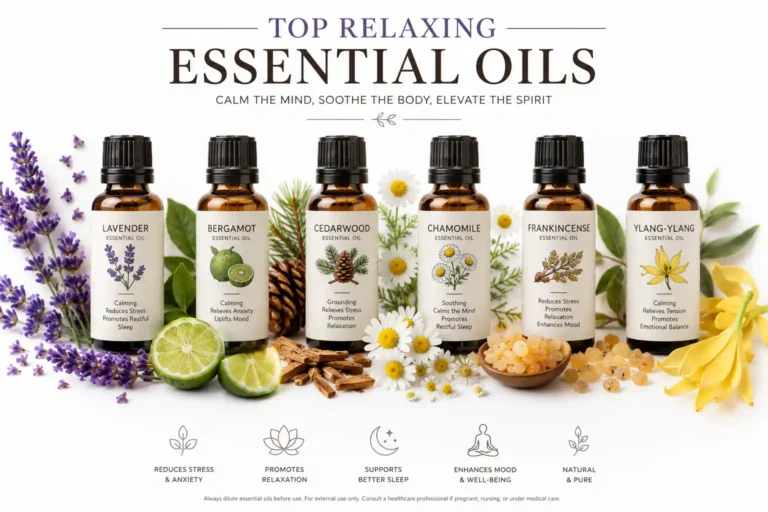
4. Which essential oils are best for relaxation?
Lavender, chamomile, frankincense, cedarwood, bergamot, and sweet orange are among the most popular essential oils used in relaxing massage blends. Many people enjoy combining two or three of these oils to create a balanced aroma.
5. Can homemade massage oil help sore muscles?
Massage itself may temporarily ease muscle tension and promote relaxation. Many people choose cooling or refreshing essential oils such as peppermint, eucalyptus, and rosemary in post-workout blends, but they should not be considered treatments for injuries or medical conditions.
6. How long does homemade massage oil last?
The shelf life depends primarily on the carrier oil. Jojoba and fractionated coconut oil may last up to two years when stored properly, while grapeseed and rosehip oils generally have shorter shelf lives. Always check for changes in smell, color, or texture before use.
7. Should I refrigerate homemade massage oil?
Most massage oils do not require refrigeration. Storing them in a cool, dark place away from sunlight and heat is usually sufficient. Refrigeration may extend the life of oils with shorter shelf lives, such as rosehip oil, but it can make some blends thicker.
8. Can I use homemade massage oil every day?
Yes. A properly diluted massage oil made with high-quality carrier oils can be used as part of a daily self-care routine, provided your skin tolerates the ingredients well. If irritation develops, discontinue use and review the blend.
9. Can I use massage oil on my face?
Some carrier oils, such as jojoba and rosehip oil, are commonly used in facial massage. Essential oils should be used at much lower dilutions on the face, and care should be taken to avoid the eyes and other sensitive areas.
10. Is homemade massage oil better than store-bought?
Homemade massage oil offers complete control over ingredients, fragrance, and dilution, making it an appealing choice for many people. High-quality commercial massage oils can also be excellent, especially when they use pure carrier oils and transparent ingredient lists. The best choice depends on your preferences, budget, and convenience.
Read Next: Give Your Tired Muscles Even More Relief
✨ Turn Your Relaxing Massage into a Complete Recovery Ritual
A nourishing homemade massage oil is the perfect foundation for relaxation—but if you’re dealing with tired, overworked, or sore muscles, there’s another guide you won’t want to miss.
Our Muscle Pain Relief Essential Oil Blend Recipe walks you through expertly balanced essential oil combinations designed to complement massage and help create a soothing post-workout or end-of-day routine. You’ll discover the best essential oils to pair together, proper dilution tips, and simple recipes that fit naturally into your wellness lifestyle.
Whether you’ve spent hours at a desk, finished an intense workout, or simply need a little extra comfort, this guide can help you build a more effective at-home massage experience.
👉 Continue reading the “Muscle Pain Relief Essential Oil Blend Recipe” article on H2O Blends to discover your next favorite DIY blend.
Explore More Natural Wellness Guides
Every homemade massage oil is just the beginning of your aromatherapy journey.
At H2O Blends, you’ll find practical, science-informed resources to help you confidently explore essential oils, carrier oils, DIY wellness recipes, and natural self-care ideas. From beginner-friendly tutorials to advanced blending techniques, each guide is designed to help you create safer, more enjoyable aromatherapy routines at home.
If you enjoyed this guide, explore more articles on https://www.h2oblends.com/ for fresh inspiration, seasonal recipes, and expert tips that make natural wellness simple and accessible.
Conclusion
Creating your own homemade oil massage blend is one of the easiest ways to elevate your self-care routine while choosing ingredients that match your skin type, scent preferences, and wellness goals. With just a few quality carrier oils and carefully selected essential oils, you can craft personalized blends for relaxation, dry skin, post-workout recovery, or everyday comfort.
The key is to start simple, use safe dilution guidelines, and focus on high-quality ingredients. Over time, you’ll discover your favorite combinations and gain confidence in creating custom massage oils that fit seamlessly into your lifestyle.
Every bottle you make is an opportunity to slow down, care for your skin, and enjoy the calming ritual of massage. Experiment with new recipes, refine your blends, and let each massage become a moment of relaxation and renewal.