Mild Soap for Tattoo Aftercare: How to Choose the Best Soap for Healthy Healing
A fresh tattoo is more than body art—it’s an open wound that deserves thoughtful care. One of the simplest decisions you’ll make during healing is choosing the right soap, yet using the wrong cleanser can lead to unnecessary irritation, dryness, or delayed recovery.
The best soap for tattoo aftercare is typically a mild, fragrance-free cleanser that removes bacteria, excess ink, and plasma without stripping your skin’s natural protective barrier. Whether you’re wondering about green soap tattoo products, searching for the best soap for a new tattoo, or asking if Dove soap is safe on tattoos, this guide explains what really matters based on current dermatology recommendations and practical aftercare experience.
By the end, you’ll know exactly what ingredients to look for, what to avoid, and how to wash your tattoo correctly from day one through the final stages of healing.
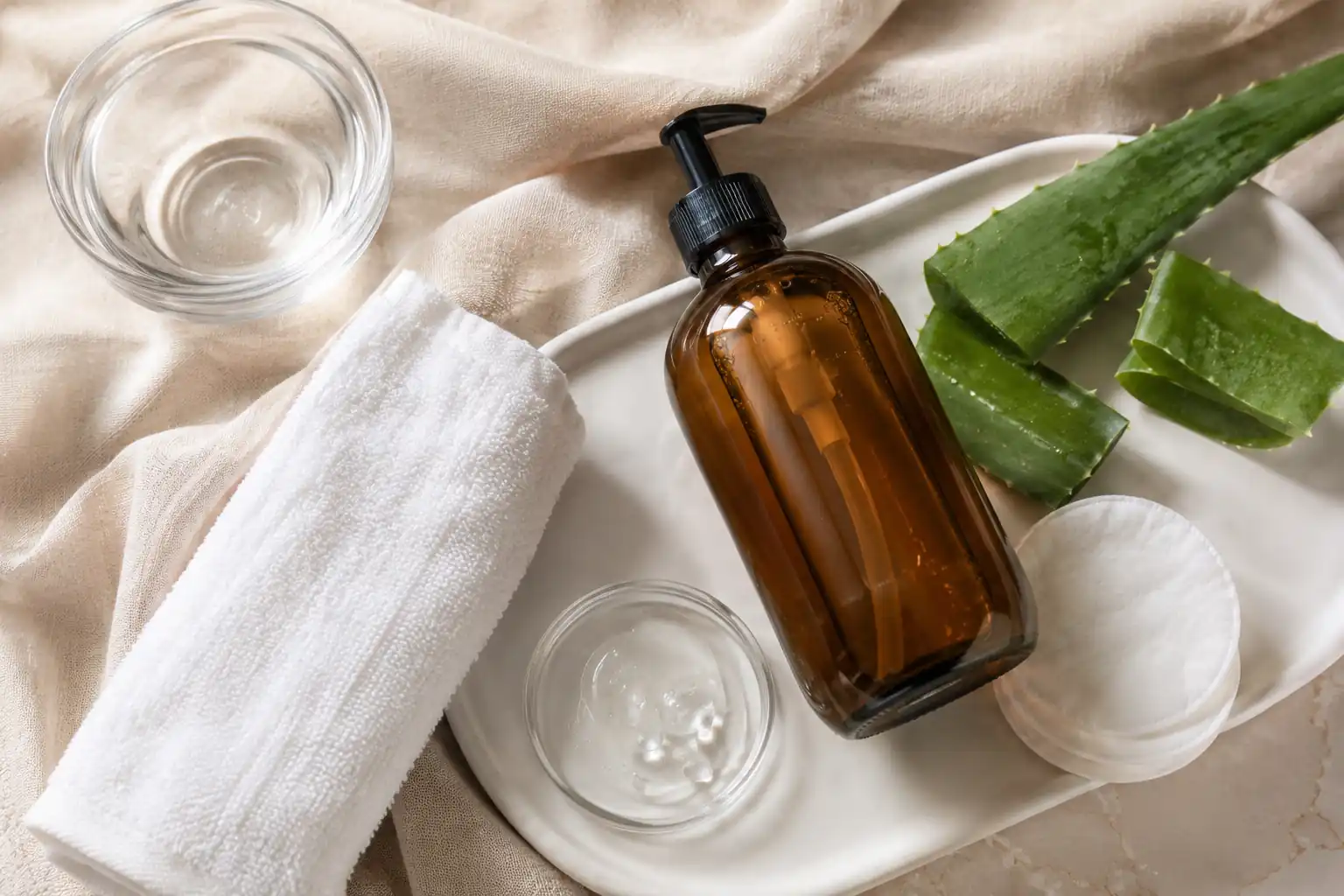
A mild soap for tattoo aftercare is a fragrance-free, gentle cleanser that effectively removes bacteria and excess fluids without irritating healing skin. Look for sulfate-free, alcohol-free formulas with a skin-friendly pH and avoid harsh fragrances, exfoliants, antibacterial additives unless specifically recommended by your tattoo artist or healthcare provider.
Key Takeaways
- Mild, fragrance-free soap is generally the safest choice for healing tattoos.
- Wash your tattoo gently 1–2 times daily unless your artist recommends otherwise.
- Avoid heavily scented soaps, harsh detergents, exfoliating scrubs, and alcohol-based cleansers.
- Green soap used during tattooing is different from everyday tattoo aftercare soap.
- Moisturizing after washing helps maintain the skin barrier.
- Proper cleansing supports healthy healing and helps preserve tattoo appearance.
- Choosing gentle ingredients matters more than choosing an expensive brand.
Table of Contents
- Why Proper Soap Matters for Tattoo Healing
- What Is a Mild Soap for Tattoo Aftercare?
- How Tattoos Heal and Why Cleansing Is Important
- Characteristics of a Good Soap for New Tattoos
- Ingredients That Support Healing
- Ingredients to Avoid
- Mild Soap vs Antibacterial Soap
- Bar Soap vs Liquid Soap
- Green Soap Tattoo: What It Is and How It’s Different
- Choosing Soap Based on Skin Type
- Frequently Asked Questions
- Final Thoughts
Why Proper Soap Matters for Tattoo Healing
A healing tattoo needs gentle cleansing to reduce surface contaminants while protecting the skin’s natural barrier. The right soap helps keep the tattoo clean without causing unnecessary dryness or irritation.
A new tattoo creates thousands of tiny punctures in the skin. During the first several days, your body works to repair these microscopic wounds by forming new skin while protecting the area from environmental contaminants.
This healing process naturally produces:
- Plasma
- Small amounts of blood
- Excess tattoo ink
- Dead skin cells
- Natural oils
If these substances remain on the skin for too long, they may create an environment where bacteria can multiply more easily. Gentle washing removes this buildup while allowing the skin to continue repairing itself.
Unlike ordinary skin, freshly tattooed skin is much more vulnerable to irritation. Harsh cleansers may:
- Disrupt the skin barrier
- Increase dryness
- Trigger unnecessary inflammation
- Cause tightness and discomfort
- Increase peeling
A gentle cleanser supports healing without interfering with your body’s natural recovery process.
How Tattoos Heal and Why Cleansing Is Important
Tattoo healing happens in stages. Your soap should clean effectively while respecting the changing needs of your skin throughout recovery.
| Healing Stage | What’s Happening | Cleansing Goal |
|---|---|---|
| Days 1–3 | Skin is inflamed and tender | Remove plasma and bacteria gently |
| Days 4–7 | Light scabbing and peeling begin | Prevent excessive dryness |
| Week 2 | New skin forms | Continue gentle cleansing |
| Weeks 3–4 | Surface mostly healed | Maintain hydration |
| Weeks 4–8 | Deeper healing continues | Keep skin healthy and moisturized |
Although the tattoo may appear healed within a few weeks, deeper layers of skin continue recovering for several months.
This is why gentle skincare remains important even after peeling stops.
What Is a Mild Soap for Tattoo Aftercare?
A mild soap cleans effectively while minimizing irritation, making it suitable for sensitive or healing skin.
A mild soap is designed to remove dirt, oils, and bacteria without aggressively stripping the skin’s protective lipids.
For tattoo aftercare, dermatologists and tattoo professionals commonly recommend cleansers that are:
- Fragrance-free
- Dye-free
- Sulfate-free whenever possible
- Alcohol-free
- Non-exfoliating
- pH-balanced
- Formulated for sensitive skin
The goal isn’t to sterilize your tattoo. Instead, it’s to keep the area clean while allowing your immune system to do its job.
Characteristics of the Best Soap for a New Tattoo
A quality tattoo cleanser should provide the following:
| Feature | Why It Matters |
|---|---|
| Mild surfactants | Remove dirt without over-drying |
| Fragrance-free | Reduces risk of irritation |
| Dye-free | Minimizes unnecessary additives |
| Skin-friendly pH | Supports the natural skin barrier |
| Easy to rinse | Leaves minimal residue |
| Gentle formula | Comfortable for damaged skin |
The simplest ingredient lists are often the best during the initial healing period.
What Makes a Good Soap for Tattoos?
The best soap for tattoos prioritizes skin health over strong cleansing power.
Many people assume antibacterial strength equals better healing. In reality, aggressive cleansers can sometimes do more harm than good by removing the skin’s protective oils.
Instead, choose products designed for:
- Sensitive skin
- Dry skin
- Post-procedure skincare
- Gentle daily cleansing
These products typically maintain a healthier moisture balance while effectively cleaning the tattoo.
Signs Your Soap Is Too Harsh
You may need a gentler cleanser if you notice:
- Burning after washing
- Persistent redness
- Excessive tightness
- Severe flaking
- Itching immediately after cleansing
- White, overly dry skin surrounding the tattoo
Some mild peeling is completely normal during tattoo healing, but significant irritation is not.
Ingredients That Support Healthy Tattoo Healing
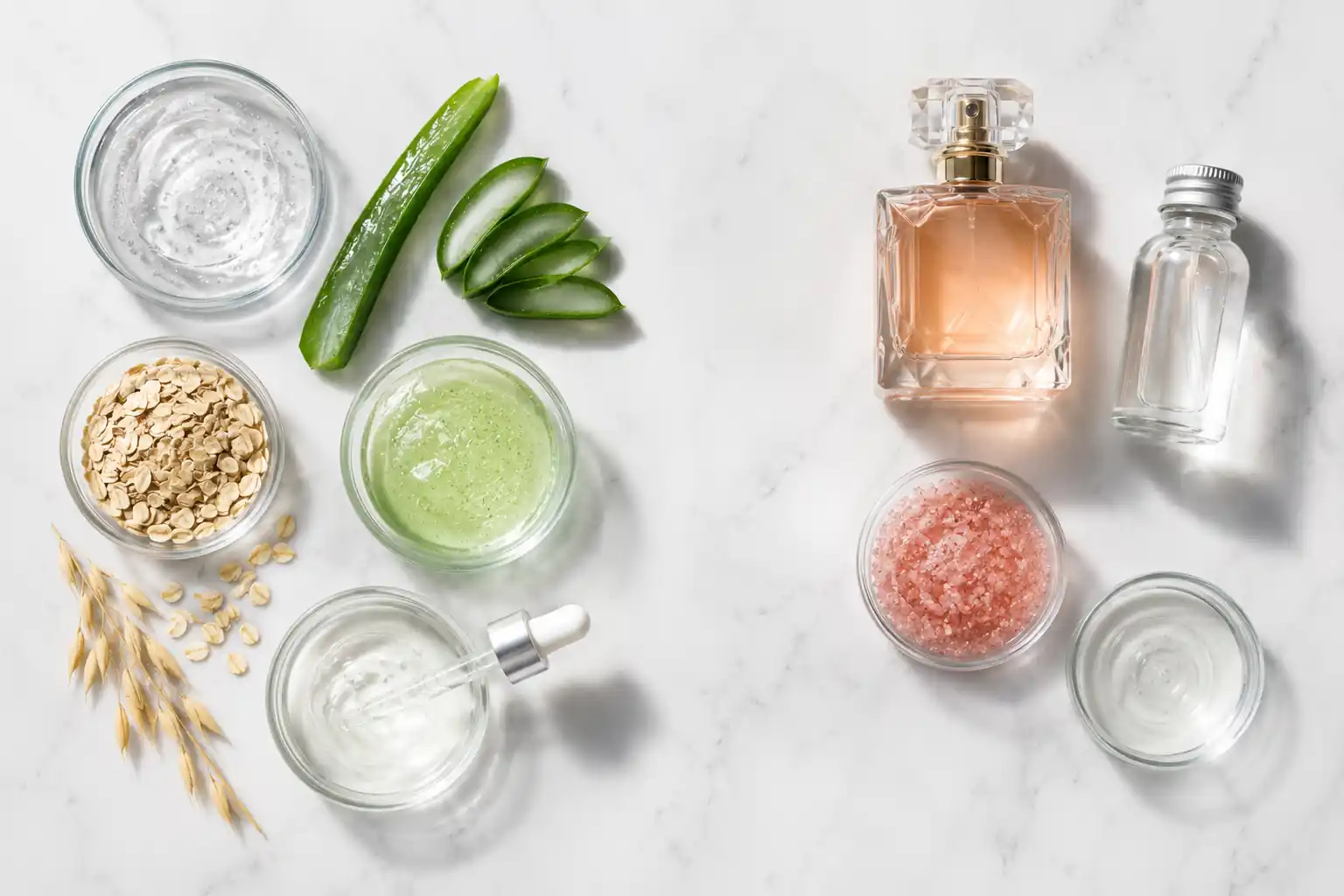
Gentle, hydrating ingredients help cleanse healing skin while maintaining its protective moisture barrier.
Although no soap can speed up healing directly, certain ingredients are known for being kinder to sensitive skin.
| Ingredient | Benefit |
|---|---|
| Glycerin | Helps attract moisture |
| Aloe vera | Provides soothing hydration |
| Coco-glucoside | Gentle plant-derived cleanser |
| Decyl glucoside | Mild cleansing agent |
| Sodium cocoyl isethionate | Creamy, gentle surfactant |
| Panthenol (Vitamin B5) | Supports skin hydration |
| Oat extract | Helps soothe sensitive skin |
| Allantoin | Comforts irritated skin |
These ingredients are commonly found in cleansers formulated for sensitive or compromised skin.
Skin-Friendly Cleansing Agents
Not all cleansing ingredients are equally harsh.
Gentler surfactants include:
- Coco-glucoside
- Decyl glucoside
- Sodium cocoyl isethionate
- Sodium cocoyl glutamate
- Disodium cocoamphodiacetate
These tend to cleanse effectively while being less drying than stronger detergents.
Ingredients to Avoid During Tattoo Aftercare
Avoid ingredients that may dry, irritate, or unnecessarily stress healing skin.
| Ingredient | Why Avoid It |
|---|---|
| Strong fragrance | May irritate healing skin |
| Artificial dyes | Add no healing benefit |
| Alcohol (high concentrations) | Can increase dryness |
| Physical exfoliants | May damage fragile skin |
| Walnut shell powder | Too abrasive |
| Apricot kernel scrub | Can disturb healing |
| Strong sulfates (high levels) | May strip natural oils |
| Essential oils (high concentrations) | Can irritate fresh tattoos |
| Menthol | Cooling but potentially irritating |
| Peppermint oil | May sting damaged skin |
Expert Note: Although essential oils have many wellness applications, they are generally not recommended on fresh tattoos unless specifically included in a professionally formulated aftercare product. Pure essential oils are highly concentrated and may irritate healing skin.
Mild Soap vs Antibacterial Soap
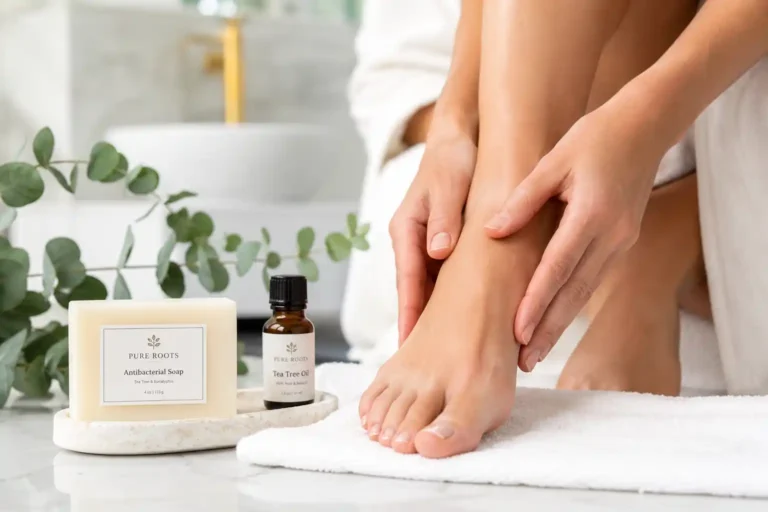
A mild soap is usually sufficient for routine tattoo aftercare. Antibacterial soap isn’t automatically better and may be unnecessarily harsh for some people.
| Mild Soap | Antibacterial Soap |
|---|---|
| Gentle cleansing | Targets bacteria more aggressively |
| Better moisture retention | May increase dryness |
| Suitable for frequent washing | Some formulas can irritate sensitive skin |
| Often fragrance-free | May contain stronger active ingredients |
| Supports skin barrier | Barrier disruption possible with frequent use |
Unless your tattoo artist or healthcare provider gives different instructions, a gentle cleanser is often the preferred daily choice.
Bar Soap vs Liquid Soap for Tattoo Aftercare
| Feature | Bar Soap | Liquid Soap |
|---|---|---|
| Hygiene | Can collect surface contaminants if shared | More hygienic with pump packaging |
| Ease of use | Good if stored dry | Convenient for frequent washing |
| Skin feel | Depends on formulation | Often easier to rinse |
| Sensitive skin formulas | Available | Widely available |
| Travel | Convenient | Less portable |
For most people, a fragrance-free liquid cleanser in a pump bottle is the easiest and most hygienic option during the first weeks after getting a tattoo.
How to Choose the Best Soap for a New Tattoo
Choose a soap that is:
- Fragrance-free
- Dye-free
- Alcohol-free
- Gentle on sensitive skin
- Easy to rinse
- pH-balanced
- Free from exfoliating particles
- Suitable for daily use
Avoid soaps that promise deep cleansing, intense exfoliation, or strong antibacterial action unless specifically advised by a healthcare professional or tattoo artist.
Think of a healing tattoo like delicate facial skin after a professional skin treatment. The objective isn’t to scrub the area clean—it’s to remove impurities while preserving the skin’s natural barrier. A simple, gentle cleanser paired with proper moisturizing often provides the best environment for healthy healing.
Best Soap Types for a New Tattoo
There isn’t one perfect soap for every tattoo. The best choice depends on the formula—not the brand. Look for gentle, fragrance-free cleansers made for sensitive skin.
A quality tattoo cleanser should clean away sweat, dried plasma, excess ink, and everyday dirt without disrupting the skin’s moisture barrier.
Recommended Soap Characteristics
| Feature | Why It Matters |
|---|---|
| Fragrance-free | Reduces irritation risk |
| Sulfate-free (when possible) | Less drying for healing skin |
| pH-balanced | Supports the skin barrier |
| Dye-free | Minimizes unnecessary additives |
| Non-comedogenic | Helpful for acne-prone skin |
| Easy to rinse | Prevents residue buildup |
Choosing Soap by Healing Stage
| Healing Stage | Best Type of Soap |
|---|---|
| First 3 days | Ultra-gentle fragrance-free liquid cleanser |
| Days 4–10 | Mild cleanser with hydrating ingredients |
| Weeks 2–4 | Gentle daily cleanser suitable for sensitive skin |
| After healing | Continue using a mild cleanser to preserve skin health |
Green Soap Tattoo: What Is It?
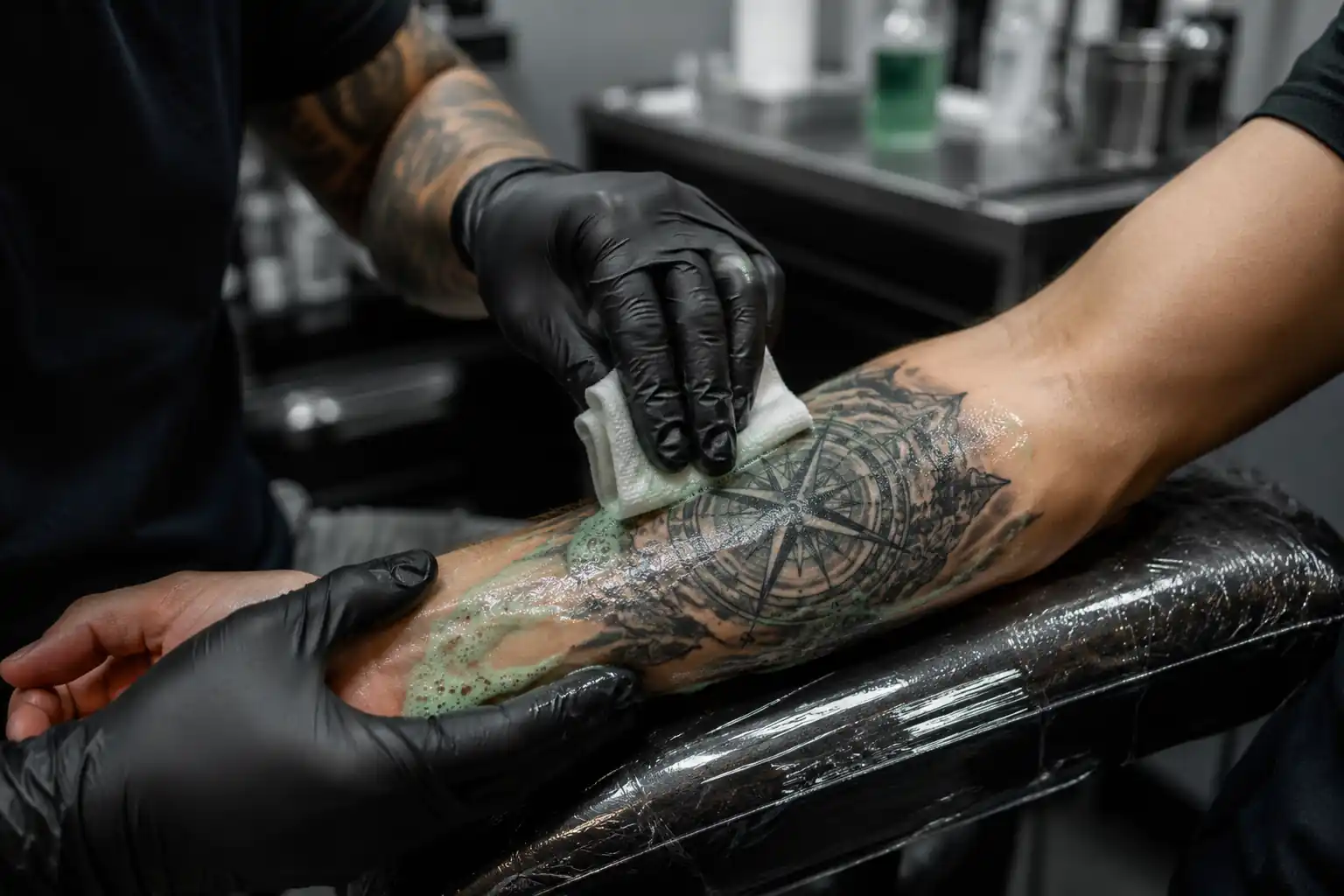
Green soap is a professional tattooing product used during the tattoo process. It is not necessarily the best soap for daily tattoo aftercare at home.
Many first-time clients hear tattoo artists mention green soap and assume they should continue using it after leaving the studio.
In reality, green soap serves a different purpose.
Tattoo artists commonly dilute green soap with water and use it during tattooing to:
- Remove excess ink
- Wipe away small amounts of blood
- Clear plasma
- Keep the tattoo visible while working
It is designed for professional procedures rather than long-term daily cleansing.
What Is Green Soap Made Of?
Traditional green soap formulations may contain ingredients such as:
- Vegetable oils
- Glycerin
- Lavender oil (in some formulations)
- Purified water
- Plant-derived surfactants
Formulas vary by manufacturer.
Some contain fragrance or essential oils, making them less suitable for freshly healing tattoos if used repeatedly.
Should You Use Green Soap at Home?
For most people:
Usually no.
Instead, choose a gentle cleanser designed for sensitive skin.
Green soap can be useful in professional settings because:
- It’s concentrated.
- It’s diluted before use.
- Tattoo artists know how to use it appropriately.
At home, a fragrance-free daily cleanser is generally simpler and more suitable.
Green Soap vs Mild Soap
| Green Soap | Mild Soap |
|---|---|
| Professional product | Daily skincare cleanser |
| Often concentrated | Ready to use |
| Used during tattooing | Used during healing |
| May contain essential oils | Usually fragrance-free |
| Designed for studio procedures | Designed for sensitive skin |
Is Dove Soap Good for Tattoos?
Some fragrance-free Dove Sensitive Skin products may be suitable for tattoo aftercare, while heavily scented Dove products are generally not recommended for fresh tattoos.
One of the most common questions online is:
“Can I use Dove soap on my tattoo?”
The answer depends entirely on which Dove product you’re referring to.
Dove Products That May Be Suitable
Some gentle formulas designed for sensitive skin typically feature:
- No added fragrance
- Mild surfactants
- Moisturizing ingredients
- Skin-friendly cleansers
These characteristics align with general tattoo aftercare recommendations.
Dove Products to Avoid During Healing
Avoid products that contain:
- Heavy fragrance
- Exfoliating beads
- Strong perfumes
- Bright dyes
- Antibacterial additives unless specifically advised
These products may increase irritation while the tattoo is healing.
Bottom Line
If using Dove, choose a fragrance-free sensitive skin formula, not a heavily scented beauty bar or exfoliating cleanser.
Always check the ingredient list rather than relying solely on the brand name.
What Is the Best Soap to Clean a Tattoo?
The best soap to clean a tattoo is one that effectively removes dirt while protecting the skin barrier.
Rather than focusing on a single “best” product, use these selection criteria.
Look For
✓ Fragrance-free
✓ Alcohol-free
✓ Gentle surfactants
✓ pH-balanced
✓ Dye-free
✓ Sensitive skin formula
✓ Dermatologist-tested (when available)
Avoid
✗ Strong perfumes
✗ Scrubs
✗ Exfoliating acids
✗ High alcohol content
✗ Strong antibacterial chemicals
✗ Essential oil-heavy cleansers
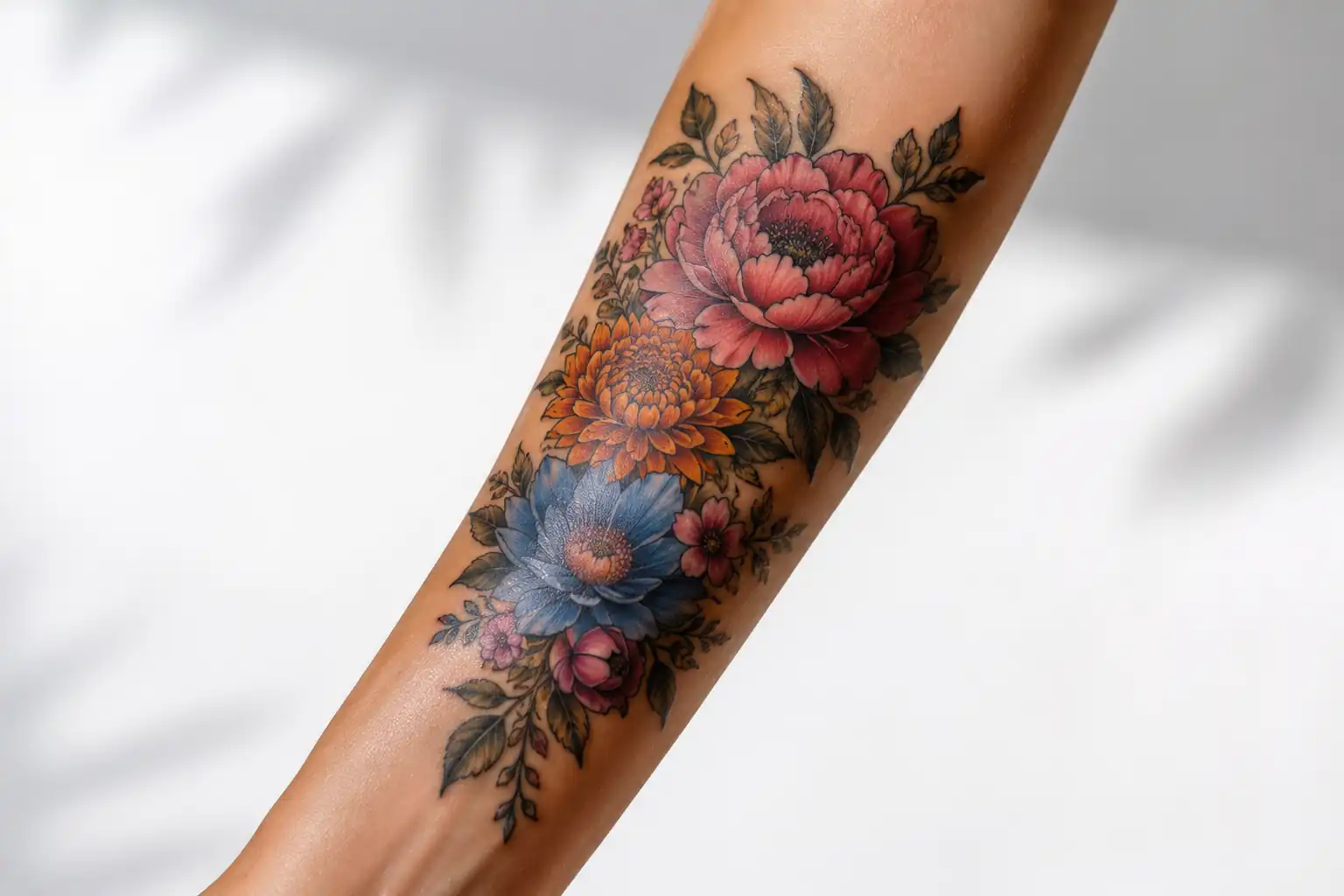
How to Wash a New Tattoo Properly
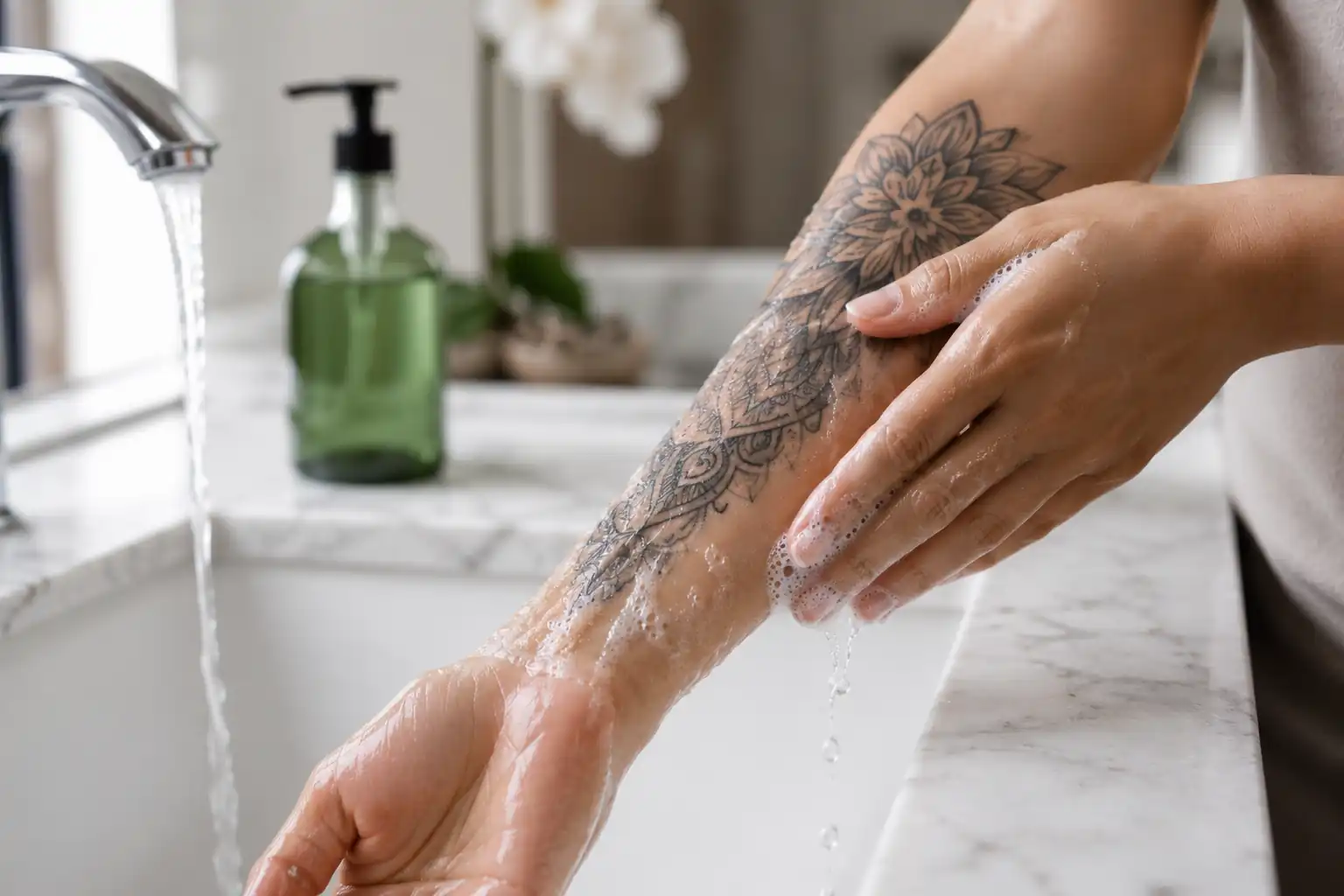
Gentle washing removes bacteria and debris without damaging healing skin. Avoid scrubbing, soaking, or using hot water.
Step 1: Wash Your Hands
Always wash your hands before touching the tattoo.
This simple step reduces the chance of introducing bacteria to the healing skin.
Step 2: Use Lukewarm Water
Avoid:
- Hot water
- Ice-cold water
Lukewarm water is comfortable and less likely to irritate sensitive skin.
Step 3: Apply a Small Amount of Mild Soap
Use only enough cleanser to create a light lather.
More soap does not mean a cleaner tattoo.
Step 4: Clean Gently with Your Fingers
Never use:
- Washcloths
- Loofahs
- Sponges
- Exfoliating gloves
Use clean fingertips and gentle circular motions.
Step 5: Rinse Thoroughly
Soap residue may contribute to dryness or irritation.
Rinse until the skin feels clean but not slippery.
Step 6: Pat Dry
Use:
- Clean paper towel, or
- Fresh soft towel reserved for your tattoo
Never rub.
Pat gently until dry.
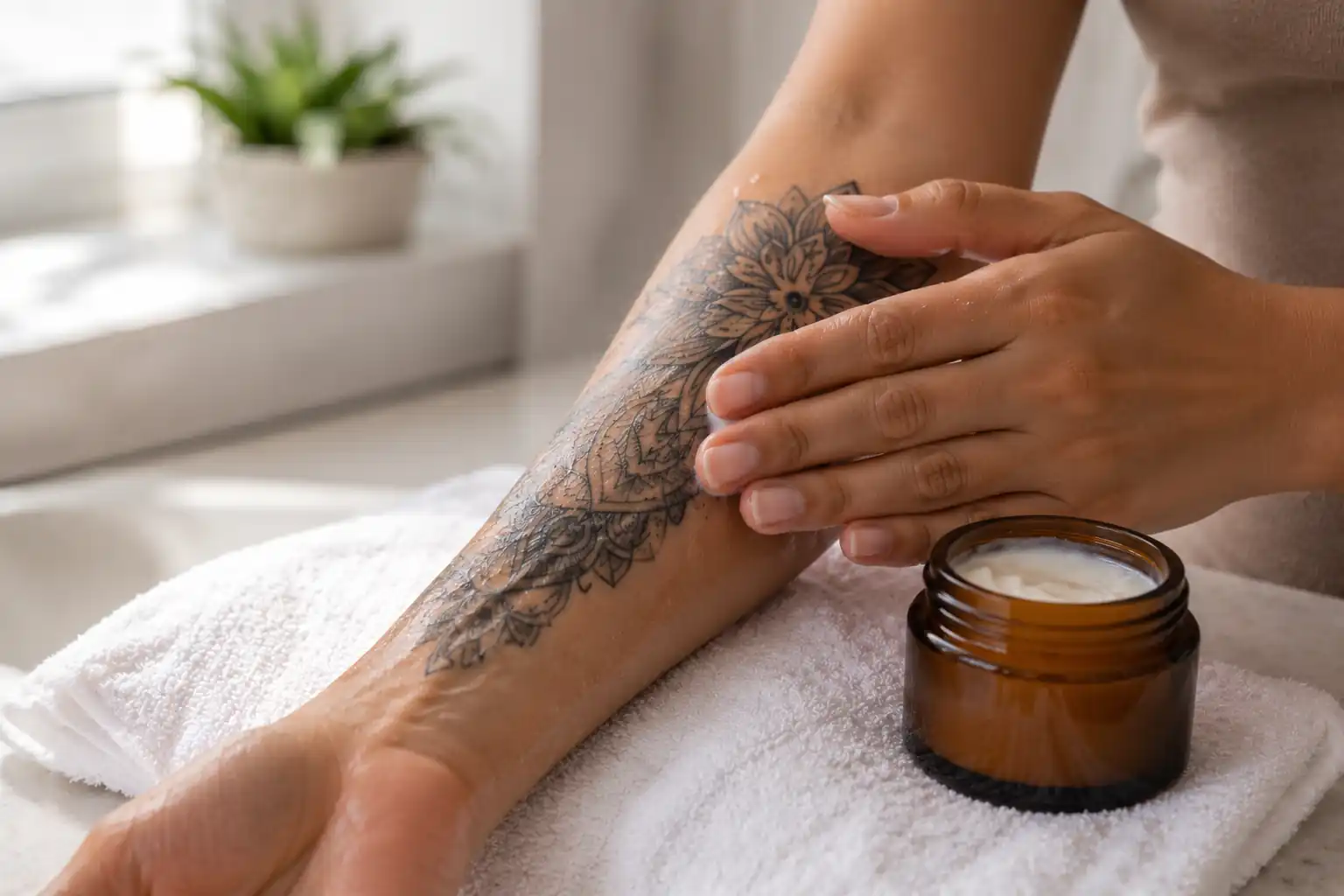
Step 7: Apply Moisturizer
Once the tattoo is dry:
Apply a thin layer of your tattoo artist’s recommended aftercare moisturizer.
Too much moisturizer can trap excess moisture.
A thin layer is enough.
How Often Should You Wash a New Tattoo?
Most tattoo artists recommend:
- Morning
- Evening
Sometimes:
- After sweating heavily
- After exercise
- If the tattoo becomes visibly dirty
Overwashing can dry out healing skin, so follow your tattoo artist’s instructions rather than washing excessively.
Common Tattoo Washing Mistakes
Most tattoo aftercare problems result from doing too much rather than too little.
Mistake 1: Scrubbing the Tattoo
A fresh tattoo does not need aggressive cleaning.
Gentle fingertips are sufficient.
Mistake 2: Using Hot Water
Hot water can increase discomfort and dry the skin.
Stick with lukewarm water.
Mistake 3: Overwashing
Cleaning six or seven times daily usually isn’t beneficial.
Twice daily is commonly adequate unless otherwise instructed.
Mistake 4: Using Scented Body Wash
Many body washes contain:
- Fragrance
- Dyes
- Botanical extracts
- Strong surfactants
These may irritate healing skin.
Mistake 5: Picking Flakes
Flaking is part of normal healing.
Picking peeling skin can affect how the tattoo heals and may increase the risk of scarring or pigment loss.
Mistake 6: Applying Too Much Lotion
A thick layer prevents the skin from breathing.
Use only a light layer.
Safety Tips for Healthy Tattoo Healing
Good tattoo aftercare combines gentle cleansing, proper moisturizing, and avoiding unnecessary irritation.
Do
- Wash with clean hands.
- Use mild soap.
- Pat dry.
- Moisturize lightly.
- Wear loose clothing.
- Keep bedding clean.
- Stay hydrated.
- Follow your tattoo artist’s instructions.
Don’t
- Scratch.
- Pick scabs.
- Swim before healing.
- Use tanning beds.
- Apply hydrogen peroxide.
- Use rubbing alcohol.
- Apply undiluted essential oils.
- Cover the tattoo longer than instructed.
Expert Recommendations
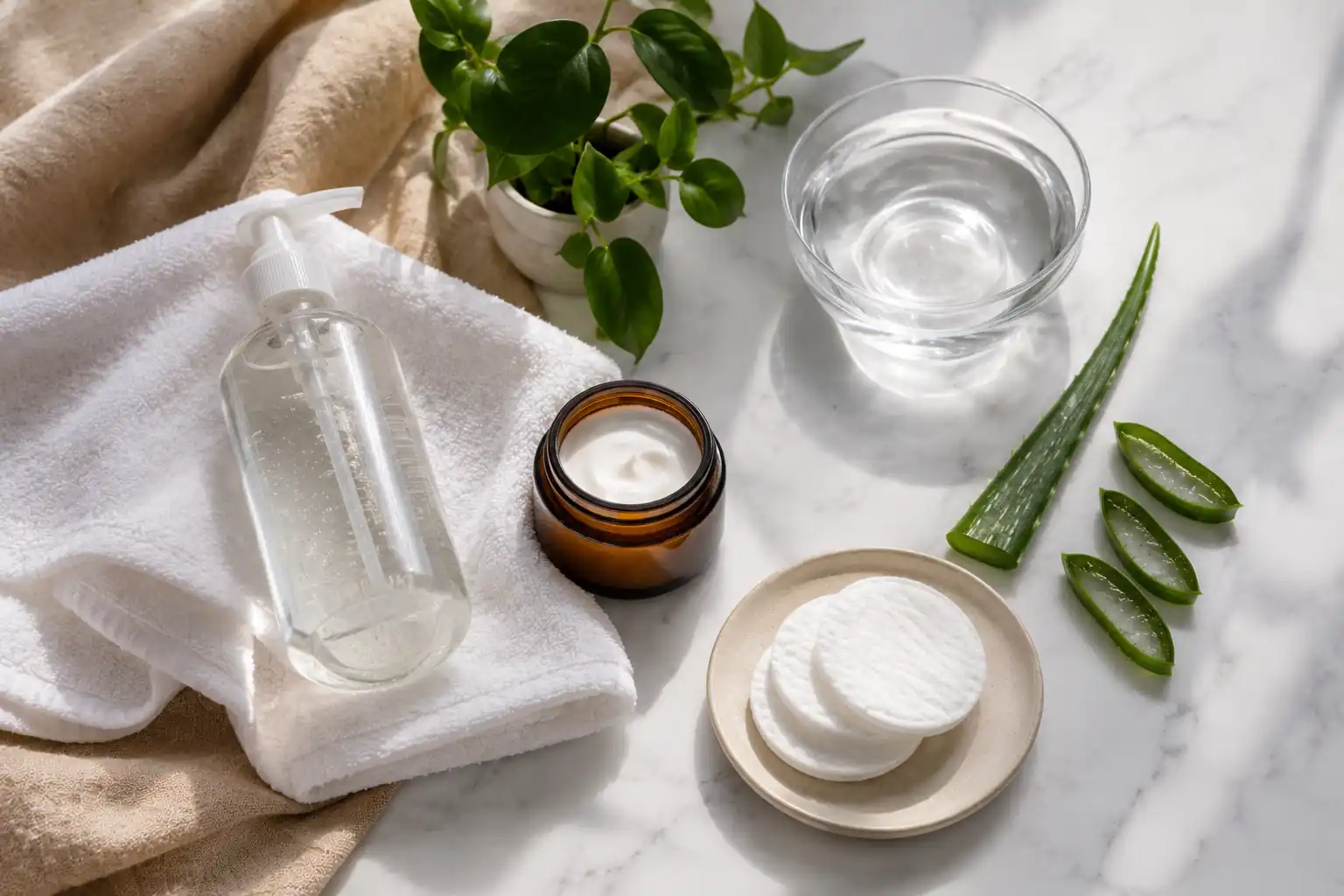
Dermatology guidance and professional tattoo aftercare practices consistently emphasize three principles:
- Keep the tattoo clean.
- Keep the skin comfortably moisturized.
- Avoid unnecessary irritation.
Expensive aftercare products are not always better. A simple, fragrance-free cleanser and a suitable moisturizer often provide everything most healing tattoos need.
If you notice increasing redness, spreading warmth, pus, severe swelling, fever, or worsening pain, contact a healthcare professional promptly, as these may be signs of infection rather than normal healing.
Best Soap for a New Tattoo
Choose:
- Fragrance-free
- Gentle cleanser
- Alcohol-free
- Dye-free
- Sensitive skin formula
- pH-balanced
Avoid:
- Heavy fragrance
- Scrubs
- Strong antibacterial products
- Essential oil-heavy soaps
- Alcohol-based cleansers
- Harsh detergents
Decision Tree: Which Soap Should You Choose?
Is your tattoo less than one week old?
- Yes → Use a fragrance-free, gentle liquid cleanser.
- No → Continue with a mild sensitive skin cleanser until fully healed.
Does your soap contain fragrance?
- Yes → Choose a fragrance-free alternative.
- No → Continue if it doesn’t irritate your skin.
Does your skin feel tight or burn after washing?
- Yes → Switch to a gentler cleanser and avoid overwashing.
- No → Continue your current routine while monitoring healing.
How to Wash a New Tattoo
- Wash your hands thoroughly.
- Wet the tattoo with lukewarm water.
- Apply a small amount of mild, fragrance-free soap.
- Clean gently using your fingertips.
- Rinse completely.
- Pat dry with a clean towel or paper towel.
- Apply a thin layer of moisturizer recommended for tattoo aftercare.
Pros and Cons of Mild Soap for Tattoo Aftercare
| Pros | Cons |
|---|---|
| Helps remove bacteria and debris | Some gentle formulas cost more than regular soap |
| Supports the skin’s natural barrier | Requires careful label reading to avoid fragrances |
| Reduces the risk of irritation | May not create a rich lather like traditional soaps |
| Suitable for sensitive skin | Product quality varies between brands |
| Easy to use daily | No single product works perfectly for everyone |
Choosing the Best Mild Soap by Skin Type
Your skin type can influence which gentle cleanser feels most comfortable during tattoo healing. The goal is always the same: clean the tattoo without damaging the skin barrier.
Best Soap Characteristics by Skin Type
| Skin Type | What to Look For | What to Avoid |
|---|---|---|
| Dry Skin | Glycerin, panthenol, creamy cleansers | High-alcohol formulas, harsh sulfates |
| Oily Skin | Lightweight, fragrance-free gel cleansers | Overly drying antibacterial soaps |
| Sensitive Skin | Minimal ingredients, fragrance-free, dye-free | Essential oils, perfumes, exfoliants |
| Combination Skin | Balanced pH, gentle surfactants | Strong foaming detergents |
| Eczema-Prone Skin | Dermatologist-tested, hypoallergenic formulas | Fragrances, botanical extracts that may trigger irritation |
Expert Tip: If you have eczema, psoriasis, or another chronic skin condition, ask your dermatologist or tattoo artist whether your usual cleanser is appropriate for a healing tattoo.
Signs Your Tattoo Is Healing Normally
Most tattoos follow a predictable healing pattern. Mild discomfort and peeling are expected, while worsening symptoms should be evaluated.
Normal Healing Signs
- Mild redness during the first few days
- Slight swelling
- Clear or light-colored plasma
- Mild itching after several days
- Thin peeling or flaking
- Skin that feels slightly tight
When to Contact a Healthcare Professional
Seek medical advice if you notice:
- Increasing redness that spreads
- Thick yellow or green drainage
- Fever or chills
- Severe or worsening pain
- Significant swelling after the first few days
- Foul odor
- Red streaks extending from the tattoo
These symptoms may indicate an infection rather than normal healing.
Best Practices for Long-Term Tattoo Care
Even after your tattoo has healed, good skincare helps preserve its appearance.
Continue to:
- Wash with a gentle cleanser.
- Moisturize regularly.
- Apply broad-spectrum sunscreen (SPF 30 or higher) once the tattoo is fully healed.
- Avoid excessive sun exposure.
- Stay hydrated.
- Keep skin healthy year-round.
Healthy skin helps tattoos maintain sharper lines and more vibrant color over time.
Frequently Asked Questions
1. What is the best mild soap for tattoo aftercare?
A fragrance-free, dye-free, gentle cleanser formulated for sensitive skin is generally the best choice. Look for products with mild surfactants and avoid harsh fragrances, exfoliants, and high-alcohol formulas.
2. Can I use Dove soap on my tattoo?
Some fragrance-free Dove Sensitive Skin products may be suitable, but heavily scented Dove soaps are generally not recommended for fresh tattoos. Always check the ingredient list rather than relying on the brand alone.
3. Is green soap the same as tattoo aftercare soap?
No. Green soap is primarily used by tattoo artists during the tattooing process. It is different from the gentle cleansers commonly recommended for daily tattoo aftercare at home.
4. How often should I wash a new tattoo?
Most tattoo artists recommend washing a new tattoo once or twice daily, or after excessive sweating or noticeable dirt exposure. Follow your artist’s aftercare instructions.
5. Can I use antibacterial soap?
A mild, fragrance-free cleanser is usually sufficient. Some antibacterial soaps may be more drying than necessary. Use one only if specifically recommended by your tattoo artist or healthcare provider.
6. Should I use bar soap or liquid soap?
A fragrance-free liquid cleanser in a pump bottle is often considered the most hygienic option because it reduces direct contact with the product.
7. Can scented soap damage a new tattoo?
Strong fragrances may irritate healing skin and contribute to dryness or discomfort. Fragrance-free products are generally the safer choice during healing.
8. What ingredients should I avoid?
Avoid:
- Heavy fragrance
- Artificial dyes
- Physical exfoliants
- High concentrations of alcohol
- Menthol
- Strong essential oil blends
- Harsh detergents
9. Can I use natural soap on a fresh tattoo?
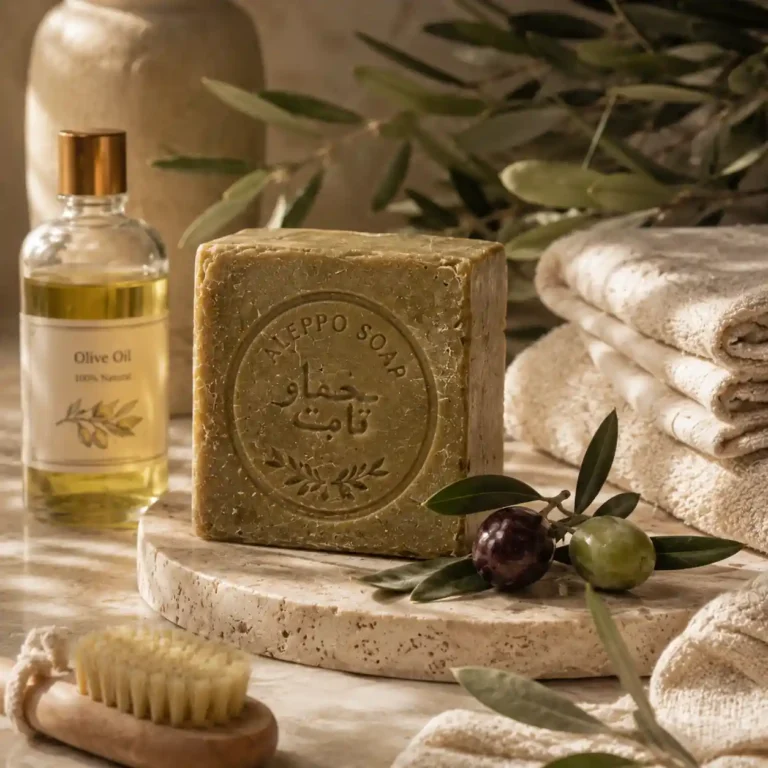
Not always. “Natural” does not automatically mean gentle. Some natural soaps contain essential oils, botanical extracts, or exfoliating ingredients that may irritate healing skin.
10. When can I return to my regular body wash?
Once your tattoo is fully healed and the skin has returned to normal, you can usually resume your regular cleanser if it doesn’t cause irritation.
11. Should I moisturize after every wash?
Yes. After gently washing and patting the tattoo dry, apply a thin layer of your tattoo artist’s recommended moisturizer to help maintain the skin barrier.
12. Can overwashing slow tattoo healing?
Yes. Washing too frequently can dry the skin, disrupt the skin barrier, and increase irritation. Gentle cleansing one or two times daily is usually enough.
Conclusion
Choosing the right mild soap for tattoo aftercare is one of the easiest ways to support healthy healing and protect your new tattoo.
Instead of chasing expensive products or harsh antibacterial cleansers, focus on what truly matters:
- Gentle cleansing
- Fragrance-free formulas
- Minimal ingredients
- Proper moisturizing
- Consistent aftercare
Remember that every tattoo and every person’s skin is different. Follow your tattoo artist’s aftercare instructions first, and don’t hesitate to seek medical advice if healing doesn’t seem normal.
A simple, consistent routine is often the best foundation for healthy skin and beautiful tattoos that last for years.
Continue Your Natural Skincare Journey
Healthy skin doesn’t stop with tattoo aftercare. Explore more evidence-informed wellness guides on H2OBlends to learn about gentle skincare, carrier oils, essential oils, botanical ingredients, and holistic self-care practices.